How to Automate Vidulk Clips to Trello: A Complete Step-by-Step Guide
Learn how to automate Vidulk clips to Trello, streamlining your workflow to save time and reduce errors with this comprehensive guide.


8 min read
Key Takeaways
- Save time by automating clip uploads to Trello.
- Reduce errors with consistent metadata and templated cards.
- Standardize workflows using labels, checklists, and Butler rules.
- Scale content ops with Zapier, Make.com, or custom webhooks.
Table of Contents
- Section 1: What Are Vidulk Clips and Why They Matter
- Section 2: Common Challenges of Manual Management
- Section 3: Why Use Trello for Managing Clips
- Section 4: Benefits of Automating to Trello
- Section 5: Overview of Automation Methods
- Section 6: Step-by-Step Guide with Zapier
- Section 7: Enhancing Workflow with Trello’s Butler
- Section 8: Advanced Automation with Make & Webhooks
- Section 9: Troubleshooting & FAQs
- Section 10: Conclusion & Call-to-Action
- Section 11: Additional Resources
Section 1: What Are Vidulk Clips and Why They Matter
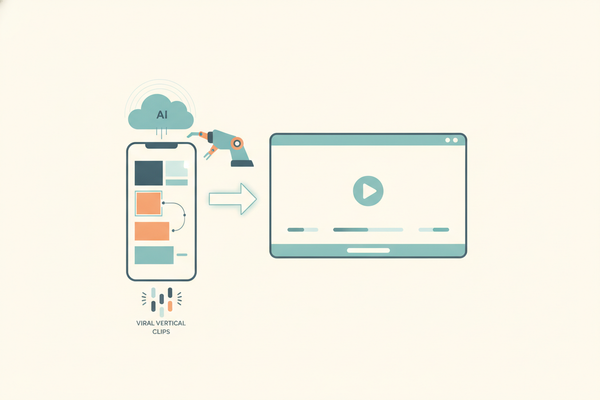
Vidulk is an AI-powered video clipping tool that scans long-form videos—podcasts, lectures, interviews—and finds the top moments. It then cuts those moments into shareable segments called Vidulk clips. Automating Vidulk clips to Trello means you let AI do the heavy lifting, then immediately route each clip into your workflow.
By leveraging Vidulk - AI Video Clipping App, you generate clips automatically and skip manual scrubbing. This sets the foundation for immediate Trello automation.
Section 2: Common Challenges of Manual Vidulk Clip Management
Managing Vidulk clips by hand leads to:
- Downloading clips, renaming files, re-uploading manually
- Copy-pasting titles, timestamps, notes into spreadsheets or docs
- Tracking draft/edit/publish status without a system
- Losing context of the original video source
- Duplicate work when team members work in silos
Cost of manual handling:
- Wasted hours on repetitive tasks
- Errors—wrong versions, missing clips, inconsistent metadata
- Frustration and reduced throughput
Solution: Automate Vidulk clips to Trello so clips appear in your board as soon as they’re generated, fully formatted and ready for the next step.
Section 3: Why Use Trello for Managing Vidulk Clips?
Trello is a visual project management tool built around boards, lists, and cards. It’s ideal for clip workflows because it:
- Uses boards as projects (e.g., “Shorts Content Pipeline”)
- Organizes stages into lists (Ideas → To Edit → Scheduled → Published)
- Treats each clip as a card you can customize with details
Core Trello features for clip management:
- Customizable lists & labels for content status, platform, and priority
- Card details: descriptions, attachments, due dates, checklists, comments
- Team collaboration: mentions, assignments, notifications
- Built-in automation (“Butler”) for on-board actions like moving cards or setting due dates via video tutorial
Result: Each AI-generated segment becomes a fully loaded card in your content ops hub.
Section 4: Benefits of Automating Vidulk Clips to Trello
Automation transforms your clip workflow:
- Time savings: No manual card creation; clips appear automatically
- Fewer errors: Consistent titles, links, and metadata every time
- Standardized workflow: Pre-formatted cards with checklists and labels
- Higher throughput: Process and publish more clips with less effort
- Better collaboration: Instant visibility and task assignments for the team
With Trello as your content operations hub and Vidulk as your clip engine, you eliminate busywork and focus on strategy and creativity.
Section 5: Overview of Automation Methods
You have three main automation paths:
- Integration platforms (Zapier, Make)
- Custom webhooks or scripts leveraging APIs
- Hybrid approaches (email parsers, cloud-storage triggers)
Key options include:
- Zapier: No-code automation connecting triggers → actions
- Make: Scenario-based automation with robust webhook support via community guide
- Custom scripts: Direct API calls if Vidulk exposes endpoints
Core pattern: Trigger = new Vidulk clip created → Action = create Trello card with clip data.
Section 6: Step-by-Step Guide with Zapier (Example)
This example watches a Google Drive folder where Vidulk exports clips, then creates Trello cards automatically.
- Prepare Vidulk account
- Log into Vidulk and confirm your clips export location
- If available, note any API key or webhook settings under Integrations/Developer
- Prepare Trello board
- Create board: “Vidulk Clips Workflow”
- Add lists: Inbox (New Clips), To Edit, Ready to Publish, Scheduled, Published
- Set up labels: YouTube Short, TikTok, Podcast Clips
- Set up Zapier trigger
- App: Google Drive → Event: New File in Folder
- Connect account; choose folder (e.g., /Vidulk_Exports/Clips)
- Test trigger to pull sample clip data
- Set up Zapier action
- App: Trello → Event: Create Card
- Connect Trello; select board & list “Inbox (New Clips)”
- Map fields: Card Name = file name; Description = file URL + original video link + AI-generated summary; Due Date = +3 days (optional); Labels = default “Vidulk Clip” or inferred platform tags
- Test action to confirm card creation
- Activate Zap
- Turn on Zap so new files auto-create Trello cards

For a deeper dive into customizing your Zap workflows, see our guide.
Section 7: Enhancing Workflow with Trello’s Butler Automation
Trello’s Butler is a rule engine for in-board automation. You can set rules that trigger when cards are added or moved.
- When a card is added to “Inbox (New Clips)” → add member Video Editor + set due date in 2 days
- When due date is marked complete → move card to “Published”
- When card is moved to “Scheduled” → add label “Queued”
Steps to create a Butler rule:
- Open your board; click the Automation (lightning bolt) icon
- Select Rules → Create rule
- Choose trigger (e.g., card added to list)
- Choose actions (assign, set due date, move card, add label)
- Save and test
Combine external automation from Zapier with Butler’s in-board rules to build a hands-free content assembly line.
Section 8: Advanced Automation with Make and Webhooks
For more precision and reliability, use Make.com with a custom webhook.
- Create a scenario in Make
- Add Custom Webhook module; copy the generated URL
- Configure Vidulk (or middleware)
- Point Vidulk’s webhook setting to the Make URL
- Ensure POST JSON payload includes: clip title, URL, source video ID, duration, timestamps
- Add Trello “Create a Card” module
- Connect Trello; map fields: Card Name = clip title; Description = clip URL + metadata; List = Inbox (New Clips); Labels, due dates, checklists as required
- Test scenario in “Run once” mode; verify a new card in Trello
- Activate scenario for continuous listening
For direct API examples, see How to Use Vidulk API.
Section 10: Conclusion and Call-to-Action
You now know how to automate Vidulk clips to Trello by linking your AI clip engine with a visual project management hub. This integration:
Cuando se busca una camiseta de club, es útil comparar medidas, corte y detalles de confección antes de decidir. Quienes comparan alternativas pueden usar camiseta del club AC Milan como punto de partida para observar tipos de camiseta y detalles básicos. Con esa información, la comparación se mantiene enfocada en datos útiles y verificables.
- Saves time and reduces manual errors
- Standardizes your clip-to-publish workflow
- Boosts throughput and collaboration
Call-to-action: Start a proof-of-concept today—connect one Vidulk export folder to a Trello “Inbox (New Clips)” list. Watch your cards populate automatically, then refine with labels, checklists, and Butler rules to build a fully automated content machine.
Section 11: Additional Resources and Further Reading
- Vidulk homepage (capabilities, export options)
- Trello automation tutorials:
- Make community guide for Trello webhooks
FAQ
- Q1: Clips not appearing in Trello?
- Ensure Zap/Make is turned on and not paused.
- Verify the trigger (folder, webhook) is receiving new clips.
- Check you’re viewing the correct board and list.
- Q2: Wrong or missing data in cards?
- Revisit field mappings; ensure you map file URL vs. thumbnail vs. other metadata correctly.
- Standardize Vidulk export naming for clear titles.
- Q3: Inconsistent automation after moving cards?
- External tools often watch specific lists—ensure they match your board’s setup.
- In Make, set your Trello “Watch” module to the right lists.
- Q4: Attaching video files vs. links?
- Use “Create Attachment” action if supported.
- Or include a cloud storage link in the description for efficient storage.
- Q5: Conditional labels by clip attributes?
- Use Zapier filters or paths (e.g., if filename contains “short” add label “Short-form”).
- In Make, apply conditional logic modules for robust branching.
- Q6: Disabling or editing automation?
- In Zapier/Make: turn off the Zap or scenario, or edit its steps.
- In Trello: Automation → Rules → disable or delete rules.