Clip online course videos for social promos
Learn how to clip online course videos for social promos with AI tools like Vidulk to create viral, captioned short clips for TikTok, Reels, and more.

Estimated reading time: 15 min
Key Takeaways
- AI video clipping automates turning long online course videos into shareable social promos, saving hours of manual editing.
- Choosing the best source video and pinpointing impactful moments ensures clips resonate and engage viewers effectively.
- Adding captions, hooks, consistent branding, and clear calls to action significantly boosts clip performance across platforms.
- Export formats and clip lengths should be carefully matched to TikTok, Instagram Reels, YouTube Shorts, LinkedIn, and other social media specifications.
- Batching clips and scheduling distribution maximizes reach, maintains audience engagement, and drives steady course enrollments over time.
Table of Contents
- Section 1: Selecting and Preparing Source Videos for Clipping
- Section 2: Identifying the Best Moments to Clip from Online Courses
- Section 3: Using AI Video Clipping Tools for Efficient Editing
- Section 4: Adding Captions, Hooks, Branding, and Calls to Action
- Section 5: Exporting Clips for Different Social Media Platforms
- Section 6: Reviewing and Optimizing AI-Generated Clips
- Section 7: Distributing Clips to Drive Engagement and Enrollments
Section 1: Selecting and Preparing Source Videos for Clipping
Choosing the Best Source Video or Lesson
When planning to clip online course videos for social promos, the very first and arguably most critical step is to strategically select the right source content. Not every video or lesson is equally suitable for creating engaging social clips. Focus on lessons or sessions that naturally contain concise, impactful explanations, compelling storytelling, or unique, insightful perspectives. These types of segments tend to perform best on social media because they quickly capture attention and offer immediate value.
Beyond content, also assess the technical quality of the source video. High-resolution footage (1080p or higher) with clear, crisp audio will translate into more professional-looking clips. Videos where the speaker is enthusiastic, articulate, and with minimal background noise or distractions usually yield the best results. For example, well-produced lectures, polished interviews, or recorded webinars with good sound systems and camera work are ideal.
Additionally, consider the relevance of the content to your target audience. If your course covers multiple topics, pick videos that align with current trends or common pain points in your niche, as these will likely generate more interest.
Preparing Videos for Clipping
Before diving into clipping, preparation of your source videos is important to streamline the editing process and improve final output quality. First, ensure your video is in a format compatible with your AI clipping tool; MP4 and MOV formats are widely supported and preferred due to their balance of quality and file size.
Next, trim the source video to remove any irrelevant content such as extended introductions, technical glitches, or long pauses. For example, if a webinar starts with a 5-minute setup before valuable content begins, trimming that upfront saves time and keeps clips focused.
For lengthy content like multi-hour webinars or live streams, consider segmenting the recording by topic or chapter. This can be done by manually noting timestamps of major sections or using tools that generate automatic chapters. Segmenting creates manageable chunks that simplify the clipping of targeted promos later.
Ensure the video’s audio levels are consistent and clear; if necessary, normalize volume or reduce background noise using audio editing tools before clipping. Clear audio is crucial because it improves speech recognition accuracy and viewer comprehension.
Repurposing Podcasts, Interviews, and Streams
Beyond traditional course lectures, podcasts, interviews, and live streams are treasure troves of valuable content you can repurpose into engaging clips. For example, a podcast episode often contains insightful discussions or memorable quotes that resonate with audiences.
To clip from podcasts or streams, first convert audio or video files into compatible formats (MP4 or MP3 for audio). Vidulk supports uploading files directly or pasting URLs from platforms like YouTube, streamlining this process without manual downloads.
Identify moments rich with lessons, humor, or emotional exchanges. For instance, in an interview, a guest’s personal story or an expert’s clear explanation of a complex idea makes for compelling short clips. Vidulk’s AI automatically detects these moments, helping creators efficiently repurpose lengthy content into bite-sized promos that captivate social audiences.
Section 2: Identifying the Best Moments to Clip from Online Courses
What Makes a Strong Promo Clip?
Strong promotional clips share key characteristics that hook viewers immediately and deliver concise value. Since social media users scroll quickly, your clip must grab attention within the first 1-3 seconds.
Focus on content segments where the instructor provides actionable tips, reveals surprising or counterintuitive facts, or answers frequently asked questions. For example, a clip of an instructor explaining "3 quick strategies to improve productivity" performs better than a general introduction.
- Engaging hooks: Begin with a provocative question like "Are you making this common mistake?" or a bold statement such as "This one tip doubled my sales!"
- Clear value: Demonstrate tangible benefits or solutions viewers can apply immediately, like "Use this formula to write emails that get replies."
- Emotional appeal: Leverage inspiring stories, motivational quotes, or passionate delivery to connect with viewers on a personal level.
Clips that combine these elements tend to generate higher shares, comments, and click-through rates.
Length and Pacing Considerations
Clip length is a critical factor that influences viewer retention and platform algorithm favorability. On fast-paced platforms such as TikTok, Instagram Reels, and YouTube Shorts, clips between 15 to 60 seconds strike the best balance between providing meaningful content and retaining attention.
Within this timeframe, maintain brisk pacing by trimming out filler words ("um," "like," "you know") and long pauses. Quick cuts and dynamic visuals keep viewers engaged. For example, instead of a 60-second continuous talking clip, consider breaking it up or adding visual overlays to maintain interest.
Ensure each clip can stand alone—meaning it makes sense without the full course context. Avoid including references like "as I mentioned earlier" or "in the next lesson" unless you add clarifying text or voiceover.
Using Data and AI to Find Highlights
Manually searching through hours of footage to find highlights is time-consuming and prone to oversight. AI-powered video clipping tools like Vidulk revolutionize this process by automatically analyzing content to identify high-engagement moments.
These tools use advanced speech recognition to transcribe dialogue, sentiment analysis to detect emotional peaks, and visual analysis to spot scene changes or gestures. For example, an AI might flag a segment where the speaker’s voice pitch rises or where audience laughter occurs, indicating a compelling moment.
Using AI allows creators to quickly generate a shortlist of potential clips that can then be reviewed, saving many hours and ensuring no valuable moments are missed.
Section 3: Using AI Video Clipping Tools for Efficient Editing
How AI Video Clipping Works
AI video clipping combines machine learning models trained on vast datasets of video content and user engagement behavior to automatically select meaningful segments from long videos. The AI detects dialogue, scene changes, speaker emphasis, and viewer interest signals to identify moments likely to perform well as social promos.
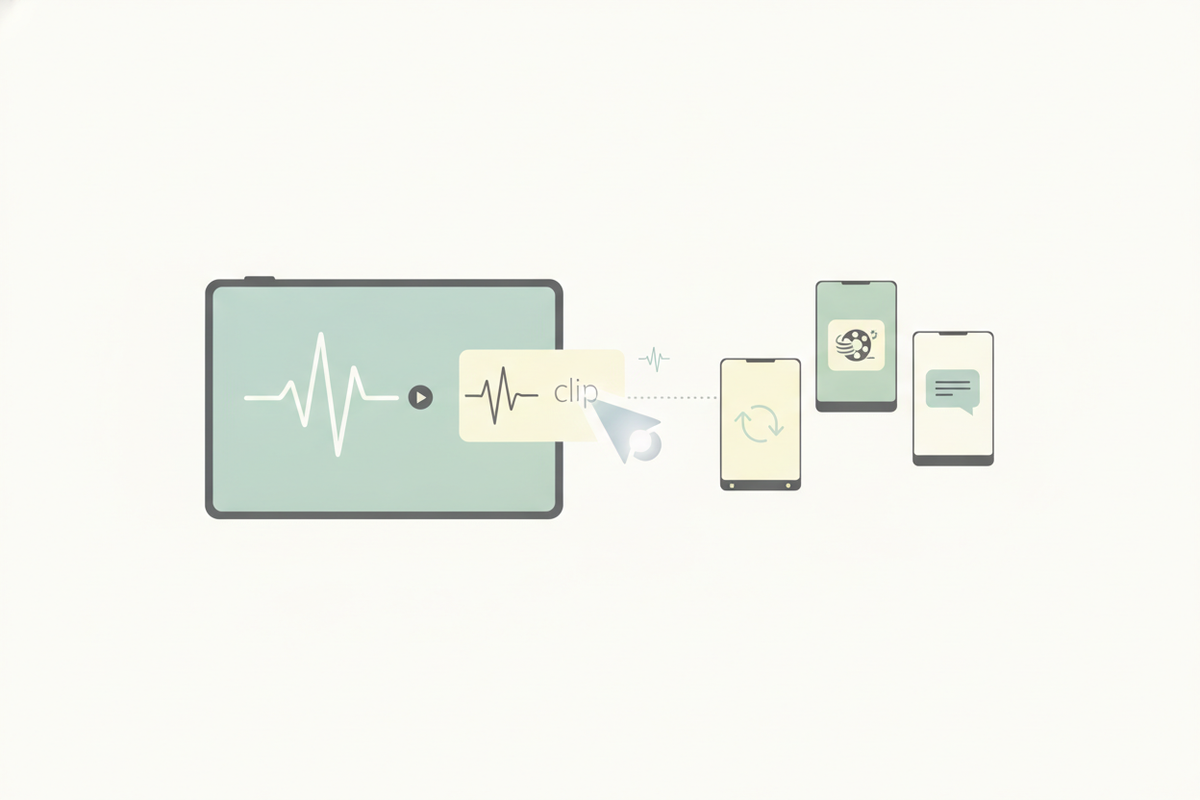
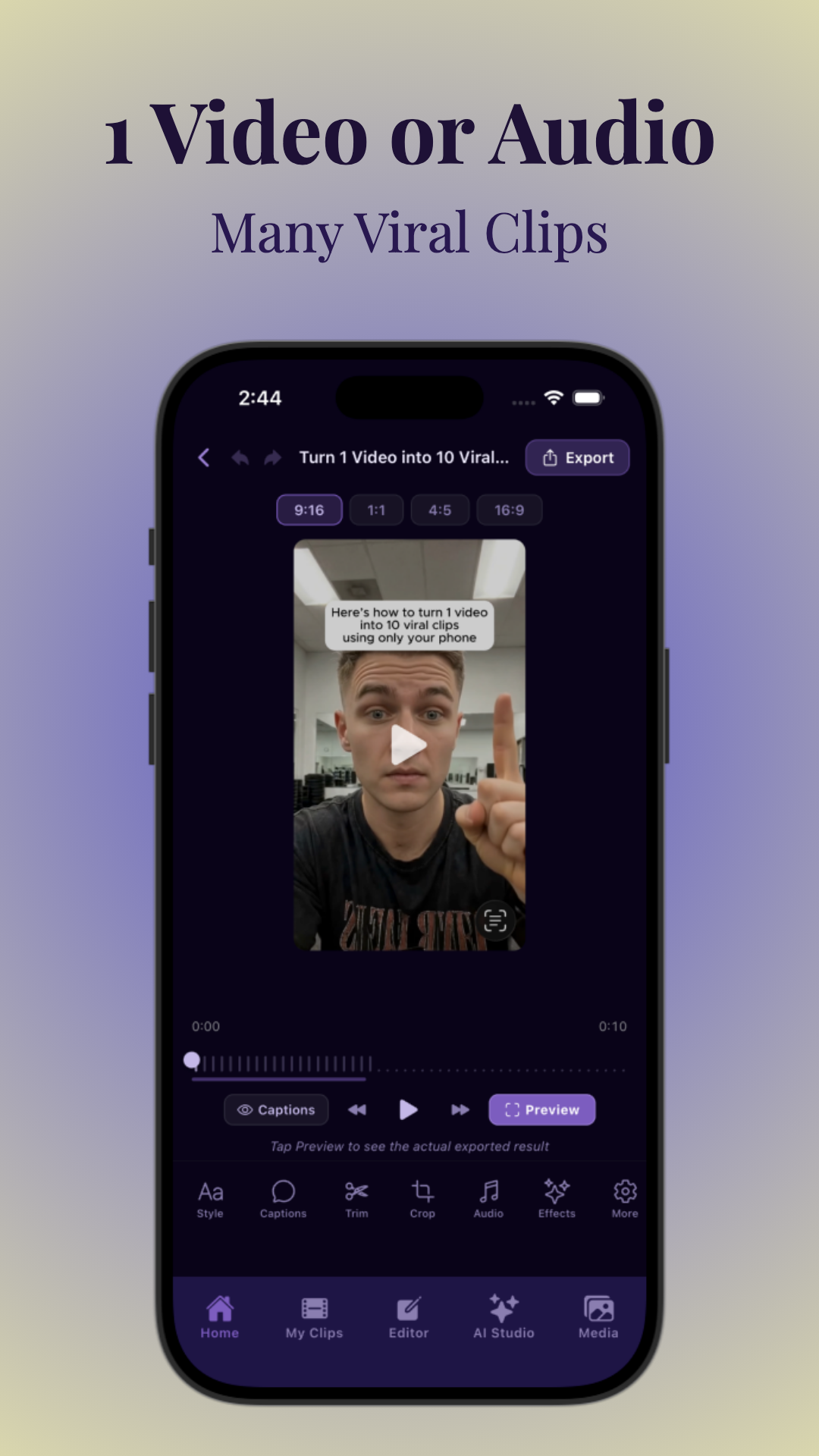
Vidulk’s platform simplifies this workflow by enabling users to upload video files or paste URLs for processing. The system automatically transcribes audio, detects highlights, crops the video to vertical (9:16) format ideal for social, and adds captions optimized for readability.
Behind the scenes, Vidulk’s AI applies natural language processing to understand content themes, sentiment analysis to gauge emotional tone, and computer vision techniques to identify speaker presence and on-screen text.
Step-by-Step AI Clipping Workflow
- Upload or link your video: Import source content via file upload or by pasting URLs from platforms like YouTube or Vimeo. Vidulk supports various formats including MP4, MOV, and more.
- AI analysis: The app processes the video to transcribe audio, segment content, and score moments by engagement potential based on voice tone, keywords, and detected visual cues.
- Clip generation: Automatically creates multiple short clips cropped to vertical format, each with synchronized captions and optional auto-generated hooks.
- Edit and customize: Review clips in the editor to adjust start/end times, refine captions for accuracy and tone, add custom hooks, overlays, logos, or calls to action.
- Export and schedule: Download clips in platform-specific formats or use integrations to schedule posts across social media channels directly from the app.
Benefits of AI Clipping Tools
- Drastically reduces manual editing time from hours to minutes, enabling faster content turnaround.
- Improves clip relevance and performance by using data-driven highlight detection rather than guesswork.
- Ensures consistent formatting, branding, and caption quality across all clips for a professional appearance.
- Enables batch processing of entire courses or podcast episodes, increasing productivity and content volume.
Section 4: Adding Captions, Hooks, Branding, and Calls to Action
Why Captions Matter
Captions are essential for social promo clips because a significant portion of social media users watch videos on mute or in sound-off environments. Accurate, easy-to-read captions ensure your message is delivered regardless of sound and improve video accessibility for viewers with hearing impairments.
AI clipping tools like Vidulk automatically generate captions using speech-to-text algorithms. These captions can be edited for accuracy, timing, and styling. Customizing font style, size, color, and background contrast helps maintain brand consistency and improves readability, especially on small mobile screens.
Studies show that videos with captions see up to 40% higher engagement rates, making captions a vital component of clip optimization.
Creating Engaging Hooks
The first few seconds of a clip are critical to capturing viewer attention. Hooks that provoke curiosity, surprise, or emotional response significantly improve watch-through rates.
Effective hooks include provocative questions ("Want to double your productivity?"), surprising facts ("Most people waste 3 hours daily—here's how to fix it"), or bold statements ("This one habit changed my life").
Vidulk offers a Free Hook Generator that uses AI to craft catchy introductions based on your clip content. Integrating these hooks at the start of your clips increases chances of viewers stopping to watch.
Incorporating Branding and CTAs
- Branding: Consistent use of logos, color schemes, and fonts aligned with your course brand reinforces brand recognition and professionalism. For example, adding your course logo watermark in a corner or using brand colors for captions creates a cohesive look.
- Calls to Action (CTAs): Include clear, concise CTAs to guide viewers toward the next step, such as "Enroll now," "Visit our website," or "Watch the full lesson." CTAs can be added as text overlays, end screens, or verbal prompts.
- Consistent Style: Use templates or presets within your clipping app to maintain a uniform visual style across all clips, building a recognizable brand presence that audiences associate with your courses.
Section 5: Exporting Clips for Different Social Media Platforms
Platform-Specific Formats and Requirements
Each social media platform has unique video specifications and best practices. Exporting clips that conform to these ensures optimal display, algorithm favorability, and viewer experience.
- TikTok and Instagram Reels: Vertical videos with a 9:16 aspect ratio work best, with clip lengths between 15 and 60 seconds. MP4 format is preferred, with a maximum file size of 2GB. Including captions and hooks is highly recommended.
- YouTube Shorts: Supports vertical or square videos under 60 seconds, in MP4 format. Shorts are designed to be quick, punchy clips that drive discovery.
- LinkedIn: Allows horizontal or square videos with longer duration limits (up to 10 minutes), supporting MP4 or MOV formats. For professional audiences, polished clips with clear branding and CTAs perform well.
Adjusting Clip Length and Quality
Trimming clips to fit within platform time limits is crucial. For instance, TikTok and Reels favor shorter, engaging clips under 60 seconds, while LinkedIn can accommodate longer, more in-depth promos.
Balance video quality and file size by adjusting export settings—higher resolution and bitrate improve visual clarity but increase file size and loading time. Aim for 1080p resolution with a bitrate that ensures crispness without causing buffering.
Vidulk’s export presets simplify this process by offering ready-made options for each platform, ensuring your clips meet technical requirements without manual adjustments.
Batch Export and Scheduling
When repurposing large volumes of content—such as entire courses or podcast series—batch exporting clips saves time and ensures consistency. Vidulk supports exporting multiple clips simultaneously, allowing creators to generate a library of promos in one session.
Scheduling posts through Vidulk’s integrations or third-party social media management tools like Buffer, Hootsuite, or Later helps maintain a steady content flow. Spaced posting avoids overwhelming audiences and leverages optimal posting times for each platform based on analytics.
Section 6: Reviewing and Optimizing AI-Generated Clips
Ensuring Accuracy and Relevance
While AI clipping tools are powerful, they are not infallible. Always review each generated clip carefully to ensure captions are accurate and contextually appropriate. Mis-transcriptions or out-of-context clips can confuse or mislead viewers, harming your credibility.
Check that clips convey clear, standalone messages that align with your marketing goals. Remove or re-edit clips that contain errors, irrelevant tangents, or confusing transitions.
Fine-Tuning Edits
- Adjust clip start and end points to eliminate abrupt cuts and create smoother transitions, improving viewer experience.
- Refine captions to correct grammar, spelling, and clarity. Use concise language to maximize readability on small screens.
- Enhance visual elements such as zooming in on the speaker, cropping distracting backgrounds, or adding overlays like arrows, highlights, or text callouts to emphasize key points.
- Consider adding background music or sound effects carefully, ensuring they do not overpower the speaker.
Testing Audience Response
After publishing, monitor performance metrics such as views, watch time, engagement (likes, comments, shares), and click-through rates on CTAs. Use platform analytics or third-party tools to gather this data.
Analyze which clips perform best in terms of engagement and conversions. Use these insights to inform future clipping choices, hook styles, and CTA placements. For example, if clips with provocative questions outperform others, incorporate more of these in your content.
Regularly updating clips based on feedback and trends helps maintain content freshness and maximizes promotional impact.
Section 7: Distributing Clips to Drive Engagement and Enrollments
Batching and Scheduling a Clip Distribution Plan
Establish a content calendar to schedule clip releases strategically. Spacing out clips over days or weeks ensures consistent audience touchpoints, building anticipation and sustained engagement.
Batching clips reduces the stress of last-minute content creation and allows for more thoughtful, high-quality posts. For example, schedule 3-5 clips per week across platforms, varying topics and formats to keep your audience interested.
Consider timing posts based on platform-specific peak engagement hours—often early morning, lunch breaks, or evenings—to maximize visibility.
Using Clips as Lead Generation and Previews
Short clips act as teasers that entice viewers to enroll in your full course. Incorporate strong CTAs linking to landing pages, free trials, or downloadables to convert interest into leads.
For example, a clip highlighting "Top 3 secrets to mastering Photoshop" can link to a free preview lesson or sign-up page. Embedding clip links in emails, blogs, or paid ads further broadens reach.
Cross-Promoting Across Platforms
Tailor clips slightly for each platform’s audience and culture. TikTok favors casual, playful clips while LinkedIn prefers professional, polished content. Adjust captions, hashtags, and thumbnails accordingly.
Share clips across TikTok, Instagram, YouTube, LinkedIn, and even in email newsletters to maximize exposure. Repurposing the same content across multiple channels amplifies reach and increases lead generation opportunities.
For creators looking to streamline this entire workflow, Vidulk offers an all-in-one AI clipping solution that not only automates moment selection and captioning but also supports export to multiple social formats and scheduling integrations. Visit Vidulk to transform your course content into viral social promos efficiently.
Conclusion
Clipping online course videos for social promos is a highly strategic approach to maximize content reach, drive audience engagement, and boost course enrollments. By carefully selecting the best source videos—those with clear, impactful content and high production quality—and identifying compelling moments that include hooks, valuable tips, and emotional appeal, creators set the foundation for success.
Leveraging AI video clipping tools like Vidulk accelerates content repurposing by automating highlight detection, captioning, and formatting for multiple platforms such as TikTok, Instagram Reels, YouTube Shorts, and LinkedIn. Enhancing clips with customized captions, engaging hooks, consistent branding, and clear calls to action further strengthens their promotional power.
Exporting clips in platform-specific formats and scheduling posts through batch workflows ensure consistent audience interaction without overwhelming creators. Rigorous review and optimization of AI-generated clips maintain quality, relevance, and alignment with marketing objectives.
Embracing this comprehensive, data-driven clipping workflow empowers content creators and educators to repurpose long-form videos effectively, grow their course audience, and generate steady enrollments with ease and efficiency.
FAQ
Q: How do I turn a course video into short social media clips?
A: Begin by selecting engaging, standalone moments from your course video that provide clear value or emotional appeal. Use AI video clipping tools like Vidulk to automatically generate short, captioned, vertical clips optimized for social platforms. Then, edit captions, add hooks or branding, and export clips formatted specifically for TikTok, Instagram Reels, YouTube Shorts, or LinkedIn.
Q: What parts of a webinar or lesson make the best promo clip?
A: The best promo clips highlight key actionable tips, surprising insights, clear answers to common questions, or emotional moments that capture attention quickly. Clips should be concise (15-60 seconds) and make sense independently without requiring full context from the original video.
Q: What is the best AI tool for clipping online course videos?
A: Vidulk is a leading AI video clipping app designed specifically for educational content. It automates identifying and generating viral, captioned clips from long videos—including online courses, podcasts, and streams—optimized for multiple social platforms with batch processing, editing, and scheduling features.
Q: How long should course promo clips be for TikTok or Reels?
A: Clips between 15 and 60 seconds perform best on TikTok and Instagram Reels, offering enough time to deliver value while maintaining viewer attention. Shorter clips around 15-30 seconds often get higher completion rates, but occasionally longer clips can work if content is highly engaging.
Q: Should I add captions and branding to course teaser clips?
A: Yes. Captions improve accessibility and engagement since many users watch without sound. Branding reinforces your course identity and professionalism, while calls to action prompt viewers to enroll or learn more, increasing conversion potential.
Q: How many clips can I make from one online course video?
A: Depending on your course length and content richness, you can generate multiple clips highlighting different lessons, tips, or insights. AI tools like Vidulk help batch process and manage these efficiently, enabling you to create a diverse library of promos from a single long-form video.
Free to start
Try the Vidulk app
Everything in this guide, in your pocket.
Get it on iPhoneGet it on Android