
How to Find Viral Moments in Long Videos
Learn how to find viral moments in long videos and turn them into engaging clips with AI tools like Vidulk. Perfect for podcasts, streams, and YouTube.


Estimated reading time: 12 min
Key Takeaways
- Use audience retention graphs and engagement signals to spot viral moments fast.
- Look for emotional spikes, surprising facts, and quotable lines to identify best moments to clip.
- Trim clips to 30-90 seconds and crop to vertical for short-form formats like YouTube Shorts.
- AI video clipping apps like Vidulk automate finding, cropping, and captioning viral clips.
- Choose clips that make sense standalone and pass the shareability test before posting.
Repurposing long videos into viral short clips is an essential skill for content creators today. Whether you have a podcast episode, a YouTube interview, or a live stream, knowing how to find viral moments in long videos helps you reach wider audiences and boost engagement. This guide will walk you through proven methods to identify, trim, and share the best clips, and how AI-powered tools like Vidulk simplify the entire workflow.
Step 1: Use YouTube Studio Audience Retention Graphs to Spot Viral Moments
One of the fastest ways to find engaging parts of your long video is by analyzing the audience retention graph in YouTube Studio. This graph shows you where viewers stick around or drop off.
Look for spikes or plateaus in retention—that’s where viewers found something interesting or valuable. These peaks often indicate moments worth clipping.
- Open YouTube Studio and select your video.
- Go to Analytics > Audience Retention.
- Identify spikes and note the timestamps.
Instead of scrubbing through the entire timeline, this method narrows down your search to specific parts that already attracted attention.
Step 2: Check Engagement Signals like Comments, Likes, and Shares
Engagement metrics can reveal what resonates with your audience. Scroll through your video comments and look for timestamps viewers mention or praise.
Also, review likes and shares on social media where you posted the video. Clips containing surprising facts, strong opinions, or emotional moments tend to get the most reactions.
- Scan comments for specific time mentions.
- Spot frequently shared segments on social platforms.
- Mark moments with high emotional or conversational energy.
Step 3: Read Transcripts to Identify Self-Contained Moments
Instead of manually scrubbing through hours of footage, read the video or podcast transcript to find quotable lines or standalone stories.
Self-contained moments are clips that make sense without extra context, which is crucial for short clips shared on platforms like Instagram or TikTok.
- Use the transcript to highlight strong opinions, jokes, or surprising facts.
- Look for natural pauses or topic shifts to define clip boundaries.
- Ensure the clip can engage viewers even if they haven’t seen the full video.
Step 4: Filter Clips by Emotional Spikes, Opinions, and Shareability
Viral clips often have high emotional energy. Look for moments that evoke laughter, shock, or inspiration.
Ask yourself: would someone DM this clip to a friend? Clips with strong visual energy, expressive delivery, or caption-friendly dialogue are more likely to go viral.
- Identify emotional highs and surprising reveals.
- Choose clips with clear hooks at the start.
- Test clips for standalone context and shareability.
Step 5: Select Clip Length and Structure for Short-Form Formats
Short videos between 30 and 90 seconds perform best on platforms like YouTube Shorts, Instagram Reels, and TikTok.
Trim clips to start on a hook and end before the energy drops. Avoid dragging the clip; keep it punchy and engaging.
- Crop videos to vertical format (9:16) for mobile-first platforms.
- Use clear captions to enhance watchability without sound.
- Keep clips concise to hold attention.
Step 6: Use AI Video Clipping Apps to Automate Finding and Editing
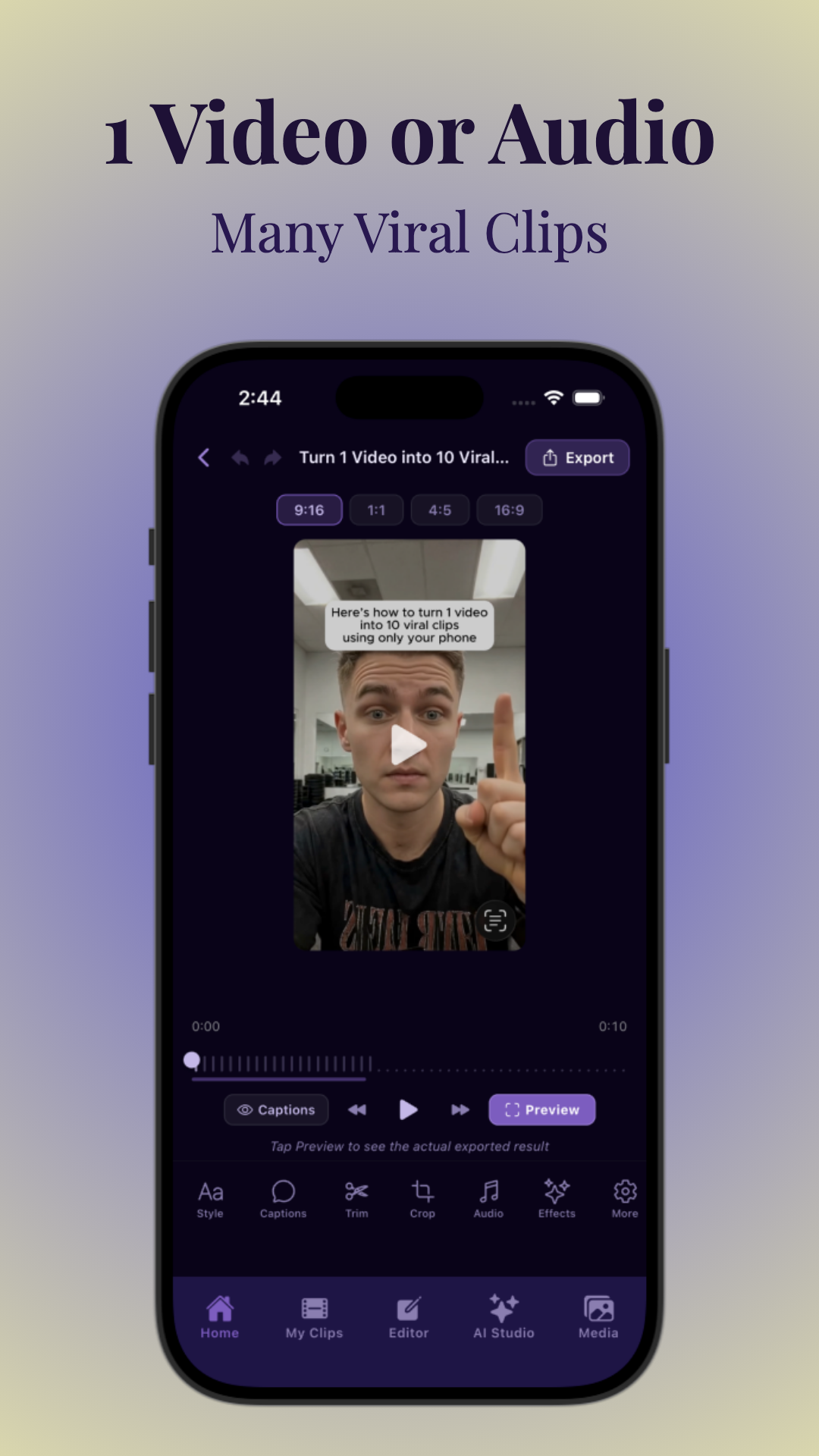
Manually clipping videos can be time-consuming. AI-powered apps like Vidulk automate the process by analyzing your long videos or podcasts and detecting viral moments.
Vidulk’s AI detects spikes in engagement, emotional cues, and quotable lines to generate captioned, vertical clips ready to post.
- Upload or paste your video or podcast link into Vidulk.
- Let AI identify the best moments to clip.
- Customize captions and visuals in the AI Studio.
- Export clips optimized for social sharing.
Step 7: Turn Podcasts, YouTube Videos, and Streams into Viral Shorts
Different video formats have nuances when clipping:
- Podcasts: Focus on compelling quotes, funny stories, or expert insights.
- YouTube Interviews: Highlight emotional reactions or surprising opinions.
- Live Streams: Capture energetic moments or key announcements.
Vidulk supports all these formats, making it easy to repurpose your content into shareable clips.
Step 8: Post with Strategy and Optimize for Engagement
Once you have your clips, post them on relevant platforms with clear captions and hashtags. Test different times and formats to see what resonates.
Cross-post clips on Instagram, TikTok, YouTube Shorts, and Twitter to maximize reach.
- Use engaging thumbnails or AI-generated intro images.
- Respond to comments to boost engagement.
- Analyze performance and refine your clipping strategy.
Tips & Common Mistakes
Here are some tips to get the most out of your viral clip creation and avoid pitfalls:
- Tip: Use audience retention data before guessing the best moments.
- Tip: Prioritize clips that tell a complete story or joke.
- Tip: Crop and caption videos for mobile-first viewing.
- Mistake: Don’t post clips too long or without a hook.
- Mistake: Avoid clips that need full context or sound to understand.
- Mistake: Don’t skip testing different platforms and formats.
Conclusion
Finding viral moments in long videos is both an art and a science. By leveraging audience retention graphs, engagement signals, transcripts, and emotional cues, you can pinpoint the best moments to clip. Using AI video clipping tools like Vidulk automates and accelerates the process, helping you create vertical, captioned clips optimized for social media.
Whether repurposing podcasts, interviews, YouTube videos, or streams, this workflow ensures your content reaches new audiences through engaging short clips. To start turning your long videos into viral shorts effortlessly, explore the features of Vidulk today.
FAQ
How do I find viral moments in a long video fast?
Use YouTube Studio’s audience retention graphs to identify spikes, scan comments for timestamps, and read transcripts to locate quotable or emotional moments. AI tools like Vidulk can automate this process.
What makes a video clip go viral?
Clips that evoke strong emotions, contain surprising facts, have expressive delivery, or tell a self-contained story tend to go viral. Shareability and concise structure also play key roles.
How do I use YouTube retention graphs to find highlights?
Open your video analytics in YouTube Studio, view the audience retention graph, and look for spikes where viewers stayed engaged. These timestamps are good candidates for clipping.
What length should a viral clip be?
Most viral short clips perform best between 30 and 90 seconds, cropped to vertical format with captions for mobile viewing.
Can AI automatically find the best moments in a video?
Yes, apps like Vidulk use AI to detect viral moments by analyzing engagement, emotional cues, and dialogue, then generate ready-to-share clips.
How do I choose clips that make sense without context?
Pick moments with a clear hook, complete thoughts, or stories that don’t require watching the full video to understand. Reading transcripts helps identify these self-contained clips.
Free to start
Try the Vidulk app
Everything in this guide, in your pocket.
Get it on iPhoneGet it on Android