
How to Create Short Clips for Facebook Stories
Learn how to create short clips for Facebook Stories from long videos using AI tools like Vidulk. Step-by-step guide for viral vertical clips.


Estimated reading time: 12 min
Key Takeaways
- Facebook Stories require vertical 9:16 videos under 20 seconds for best engagement.
- Use AI video clipping apps like Vidulk to automatically find and trim best moments.
- Repurpose podcasts, YouTube videos, and streams by cropping and adding captions.
- Apply basic edits: text overlays, music, transitions, and clear CTAs for impact.
- Export in MP4 format with recommended settings for smooth uploads.
Creating short clips optimized for Facebook Stories can dramatically boost your content’s reach and engagement. Whether you’re working with long podcasts, interviews, YouTube videos, or live streams, repurposing your content into vertical, bite-sized clips is essential. This guide explains how to create short clips for Facebook Stories, covering everything from selecting the best moments to editing and exporting your videos. We’ll also explore how AI-powered apps like Vidulk can automate much of the process to save you time and maximize viral potential.
Step 1: Understand Facebook Stories Video Requirements
Before clipping your videos, it’s important to know Facebook Stories’ format rules and limits. Facebook Stories are vertical videos displayed full screen on mobile devices, so the ideal aspect ratio is 9:16 (vertical orientation). The maximum length for a single Story video is 20 seconds, though shorter clips around 15 seconds often perform better for viewer retention.
Key Facebook Stories video specs:
- Aspect ratio: 9:16 (vertical)
- Maximum length: 20 seconds per clip
- Recommended resolution: 1080 x 1920 pixels
- Supported formats: MP4 or MOV with H.264 codec
When creating clips, keep them visually engaging and fast-paced to hook viewers immediately since Stories are designed for quick consumption.
Step 2: Select the Best Moments to Clip from Your Long Videos
Choosing which parts of your long-form content to turn into short clips is crucial. If you want to clip a podcast episode, an interview, or a YouTube video, focus on moments that are concise, interesting, or emotionally engaging. These could be funny highlights, insightful quotes, surprising facts, or questions that spark curiosity.
Tips for picking clips:
- Look for 15-20 second segments that can stand alone.
- Identify moments with a clear hook or punchline.
- Choose clips that match your audience’s interests.
- For streams or webinars, clip key announcements or reactions.
Using AI video clipping tools like Vidulk can simplify this step by automatically detecting highlights based on speech, audio cues, and engagement potential. Vidulk’s AI analyzes your full video or podcast and suggests the best clips ready for editing.
Step 3: Crop and Format Videos to Vertical 9:16 Aspect Ratio
Most long-form videos are horizontal or square, so you’ll need to crop or resize them to the 9:16 vertical format Facebook Stories require. This ensures your clips fill the screen and look professional.
How to crop and format:
- Use video editing software or apps like Vidulk that automatically convert horizontal videos to vertical.
- Frame the subject or key visuals centered vertically, avoiding cropping out important elements.
- Adjust zoom or reposition the crop box if needed to maintain clarity.
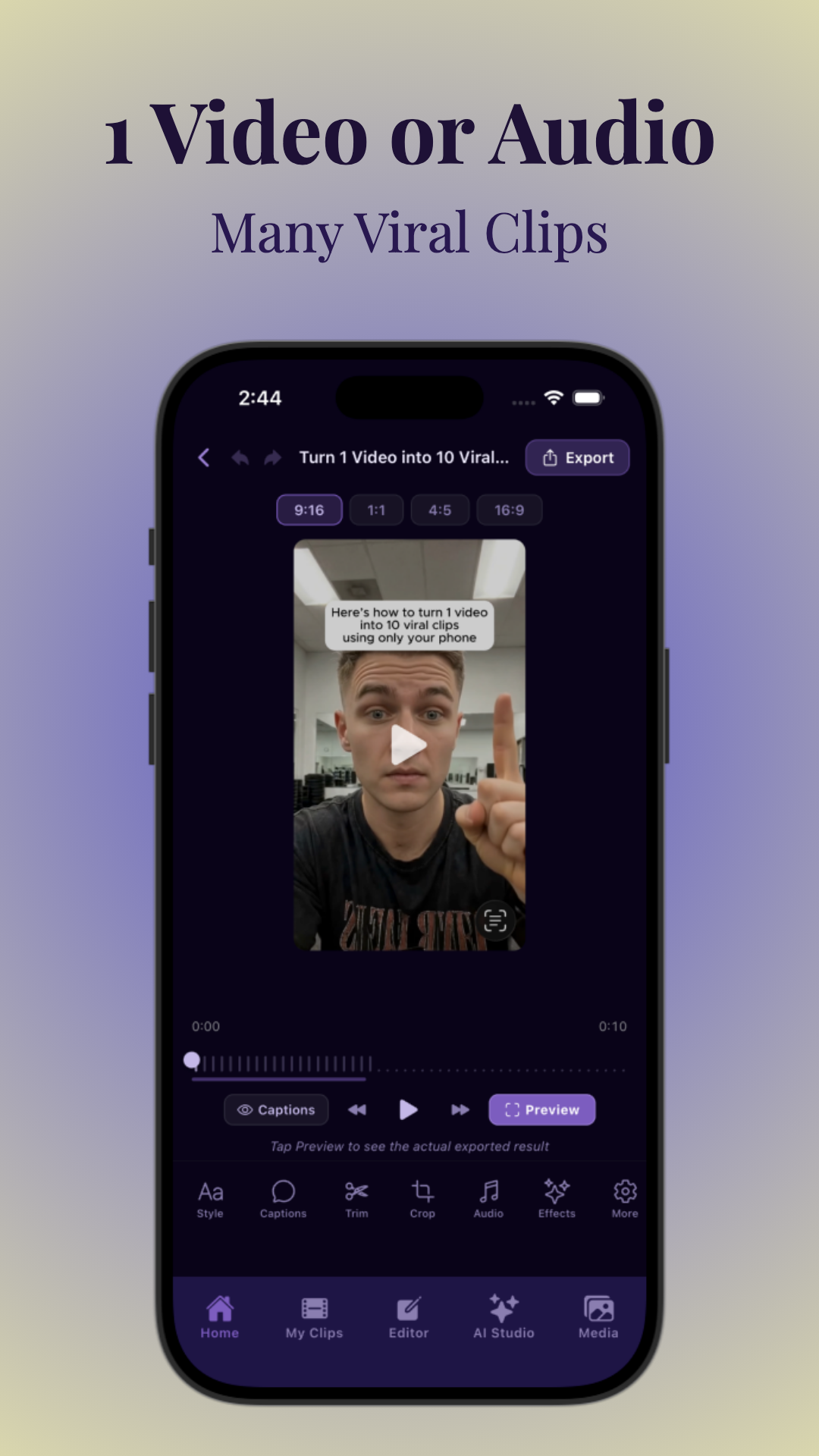
Vidulk’s AI Studio helps automate cropping and resizing while preserving important faces and objects, making this step quick and precise.
Step 4: Trim, Split, or Cut Videos into Short Story-Sized Clips
Once you have your vertical video, trim it down to the optimal length for Stories. If your chosen moment is longer than 20 seconds, split it into multiple clips to post sequentially. This approach works well for repurposing longer content like interviews or streams into digestible parts.
How to trim and split:
- Use Vidulk’s editing interface to precisely cut start and end points.
- Split longer videos into 15-20 second segments with natural breaks.
- Ensure each clip has a clear beginning and end to avoid confusion.
Vidulk’s AI clipping tool can automatically segment longer videos into multiple short clips, saving manual effort.
Step 5: Add Captions, Text, Music, and Effects for Engagement
Enhance your clips by adding text captions, background music, transitions, and effects. Captions are especially important for Stories since many users watch without sound. Clear, readable text highlights key points and hooks viewers.
Editing tips:
- Add concise captions synced with speech for accessibility.
- Use branded fonts and colors for consistency.
- Include subtle transitions or zoom effects to keep clips dynamic.
- Add royalty-free background music or sound effects for mood.
- End clips with a call-to-action (CTA) like “Swipe up” or “Watch full video.”
Vidulk offers built-in caption generation and editing tools, plus options to customize fonts and styles, streamlining this process.
Step 6: Export Clips with Optimal Settings for Facebook Stories
After editing, export your clips in the correct format and settings to ensure smooth uploading and playback on Facebook.
Recommended export settings:
- Format: MP4
- Video codec: H.264
- Resolution: 1080 x 1920 pixels (9:16)
- Frame rate: 30 fps
- Bitrate: 5 Mbps or higher for good quality
Vidulk automatically exports clips optimized for social platforms like Facebook Stories, so you don’t have to worry about technical details.
Step 7: Post Your Clips to Facebook Stories and Analyze Performance
Upload your exported clips directly from your phone or desktop to Facebook Stories. Since Stories are ephemeral, posting regularly helps keep your audience engaged. Experiment with posting times and clip styles to see what drives the most views and interactions.
Facebook also offers insights on Story performance like reach and completion rates. Use these analytics to refine your clipping and editing strategy over time for better results.
Step 8: Repurpose Other Formats Like Reels and Streams into Story Clips
Beyond podcasts and YouTube videos, you can turn Reels, live streams, and longer feed videos into Facebook Stories clips. Since these formats often have different aspect ratios or lengths, the AI clipping and cropping process is especially helpful.
How to repurpose:
- Download your Reels or stream recordings.
- Use Vidulk to trim and crop vertical clips suitable for Stories.
- Add captions and CTAs tailored to Story viewers.
This multi-format repurposing workflow helps you maximize content value across Facebook’s vertical video offerings.
Tips & Common Mistakes
When creating clips for Facebook Stories, keep these tips and pitfalls in mind:
- Hook viewers quickly: Start clips with a strong hook in the first 3 seconds to capture attention.
- Keep scenes short: Avoid long static shots or slow builds that lose viewers.
- Use captions: Many watch Stories muted; captions boost engagement.
- Don’t overcrowd text: Keep overlays minimal and readable.
- Test multiple clips: Try different moments and styles to find what resonates best.
- Avoid poor cropping: Don’t cut off faces or important visuals when switching to vertical.
- Don’t exceed length limits: Keep clips under 20 seconds to avoid auto-cut by Facebook.
Conclusion
Mastering how to create short clips for Facebook Stories from long videos unlocks new audience engagement opportunities. By selecting the best moments, cropping to vertical, adding captions, and exporting with optimal settings, you can repurpose podcasts, interviews, YouTube videos, and streams into compelling Stories clips. Leveraging AI video clipping tools like Vidulk automates much of this workflow — from detecting highlights to trimming and captioning — saving time and boosting viral potential. Start transforming your long-form content into impactful Facebook Stories today to grow your reach and connect with viewers in a fresh, dynamic format.
FAQ
How long can a Facebook Story video be?
Facebook Story videos can be up to 20 seconds long each. Clips longer than this will be split or truncated by the platform.
How do I upload a short video to Facebook Stories?
You can upload short vertical videos directly from your phone’s Facebook app by tapping “Add to Story” and selecting the video clip from your gallery.
How do I split a long video into multiple Facebook Story clips?
Use video editing tools or AI apps like Vidulk to trim and segment your long video into consecutive 15-20 second vertical clips suitable for Stories.
What is the best video size or aspect ratio for Facebook Stories?
The best size is 1080 x 1920 pixels with a 9:16 aspect ratio, which fills the vertical screen on mobile devices.
Can I turn a Reel or long video into a Facebook Story clip?
Yes, you can repurpose Reels and longer videos by cropping them to vertical format and trimming the length to fit Story limits using apps like Vidulk.
What edits should I make to a short Facebook Story video to get more views?
Add captions synced with the audio, use engaging text overlays, include background music or sound effects, and add a strong call-to-action to boost viewer interaction.
Free to start
Try the Vidulk app
Everything in this guide, in your pocket.
Get it on iPhoneGet it on Android