AI Soundbite Extractor: How It Works, Key Applications, and Future Trends
Discover how AI soundbite extractors work, their key applications, and future trends, transforming content creation with speed and efficiency.

Estimated reading time: 8 minutes
Key Takeaways
- AI soundbite extractors automate the cutting of short, meaningful clips from long-form audio/video.
- They use ASR, NLP, and audio analysis to identify and process highlights at scale.
- Applications span media, marketing, podcasting, research, and enterprise communications.
- Key benefits include efficiency, accuracy, faster time-to-publish, and improved content utilization.
- Future trends point to real-time highlighting, deeper semantics, and personalized brand voice integration.
Table of Contents
- Introduction
- What Is an AI Soundbite Extractor?
- How It Works
- Use Cases and Applications
- Benefits of Using an AI Soundbite Extractor
- Best Practices for Implementation
- Future Trends and Developments
- Conclusion
- Additional Resources
Introduction
What is a soundbite extractor? It’s a specialized AI tool that scans hours of interviews, webinars, podcasts, or broadcasts and distills them into impactful, shareable highlights. By blending automatic transcription, natural language processing, and audio analysis, these extractors save editors countless hours and surface the most memorable quotes for social media, newsrooms, and marketing campaigns.
To streamline your workflow even further, see AI audio transcription & clipping guide for a detailed look at transcription and clipping techniques.
What Is an AI Soundbite Extractor?
An AI soundbite extractor is a machine learning-driven system that autonomously identifies and clips short, meaningful segments from longer audio or video files. Unlike manual workflows—where editors scrub through content and set timecodes—AI-driven extractors handle transcription, highlight detection, and clipping without human intervention.
Manual Extraction vs. AI-Driven Extraction
- Manual workflows
- Editors listen end-to-end, mark timestamps, and trim clips by hand.
- Often requires 1–2 hours of editing per hour of content.
- AI-driven workflows
- Automatic transcription and speaker diarization.
- Natural language processing to detect highlights.
- Audio analysis for precise start/end detection.
How It Works
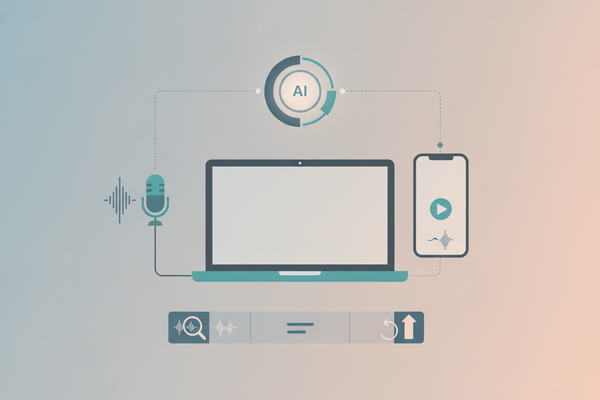
The AI extractor pipeline typically involves:
- Ingestion & Pre-processing
- Import media from local or cloud sources and normalize audio.
- Apply noise reduction and separate speakers.
- Automatic Speech Recognition (ASR)
- Convert audio to time-aligned transcripts with speaker labels.
- Generate word-level timestamps for accurate clipping.
- Natural Language Processing (NLP)
- Analyze transcripts for topics, sentiment, and named entities.
- Identify stand-alone quotes and rank segments by relevance and emotion (“PreSumm: Towards Robust and Accurate Summarization”).
- Metadata & Context Analysis
- Leverage titles, descriptions, and engagement data to guide clip selection.
- Audio Processing & Boundary Detection
- Trim silences, remove filler words, and detect natural pauses.
- Scoring & Selection
- Score segments by clarity, length, and emotional impact; select top clips.
- Output & Packaging
- Export MP4 or MP3 with subtitles and auto-generated titles/hashtags.
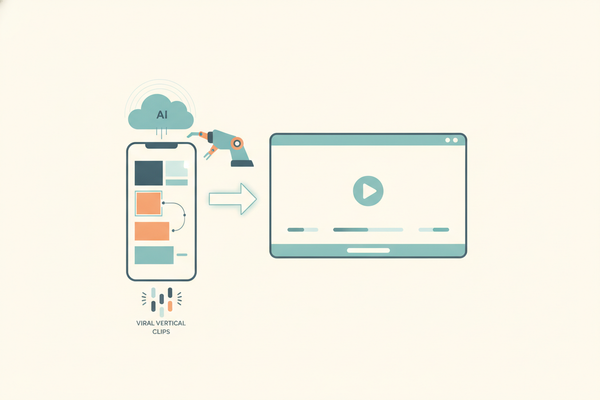
- Provide presets for TikTok, Reels, Shorts, and CMS uploads.
For additional insights on automated clipping, see how AI video clipping works.

Use Cases and Applications
AI soundbite extractors unlock value across diverse fields:
- Media & Broadcasting
- Instantly clip conferences, interviews, and debates for live news and online features (How AI is revolutionizing media clipping).
- Marketing & Social Media
- Convert webinars into bite-sized clips for LinkedIn, TikTok, and Instagram.
- Podcasting & Creator Economy
- Auto-generate trailers and teasers for cross-platform promotion.
- Journalism & Research
- Mine interviews for expert quotes and data points.
- Internal Communications
- Share CEO announcements and training highlights with remote teams.
Benefits of Using an AI Soundbite Extractor
- Efficiency
- Eliminate hours of manual editing and scale clipping operations.
- Accuracy & Coverage
- Consistent, systematic scanning reduces missed highlights.
- Speed-to-Publish
- Produce social-ready clips in minutes for breaking news or launches.
- Content Utilization
- Unlock value from back catalogs and maximize ROI.
- Quick Summarization
- Auto-generated titles and summaries double as synopses.
Source: McKinsey – AI in Media and Entertainment Study
Best Practices for Implementation
- Define Clear Goals: Identify the types of clips and platforms.
- Workflow Integration: Embed the extractor into your CMS or editing suite.
- Human-in-the-Loop: Review top picks to ensure brand voice and compliance.
- Privacy & Compliance: Manage permissions and data security.
- Iterate & Calibrate: Adjust scoring criteria based on feedback.
- Quality Inputs: Use clean audio sources for best ASR performance.
Future Trends and Developments
- Multimodal extraction combining text, audio, and video cues.
- Deeper semantic understanding for nuanced highlight selection.
- Personalization engines to match brand voice and audience preferences.
- Real-time and live-event highlighting capabilities.
- Integration with content intelligence platforms for data-driven insights.
- Enhanced context safeguards to prevent out-of-context clips.
Conclusion
An AI soundbite extractor revolutionizes content workflows by automating the creation of concise, high-impact clips. Leveraging ASR, NLP, and audio processing, it drives efficiency, accuracy, and faster time-to-publish across media, marketing, and enterprise communications. Tools like Vidulk - AI Video Clipping App can help you get started and scale your clip creation.
Additional Resources
- Further Reading
- ASR Deep Dive: Understanding Speech-to-Text Models
- NLP Summarization Techniques for Highlight Detection
- Multimodal AI in Media Production
- Tool Recommendations
- Podcast and webinar clipping platforms (Descript, Headliner)
- Social-video repurposing services (Clipchamp, Repurpose.io)
- Meeting intelligence software (Otter.ai, Fireflies.ai)
- Case Studies
- Newsrooms automating press conference clips
- Marketing teams launching webinar-driven social campaigns
- Podcast networks scaling highlight reels
FAQ
- What is an AI soundbite extractor?
An AI-powered tool that identifies and clips short, impactful segments from long-form audio or video. - How does it differ from manual extraction?
AI extractors automate transcription, highlight detection, and clipping, drastically reducing time and human effort. - Which industries benefit most?
Media, marketing, podcasting, journalism, research, and enterprise communications see the biggest gains. - What output formats are supported?
Common exports include MP4 and MP3 files with embedded captions or subtitles. - How can I ensure clip quality?
Implement a human-in-the-loop review, calibrate scoring criteria, and use high-quality audio sources.