AI Video Stabilization Mobile: Transforming Shaky Smartphone Footage into Pro-Level Clips
Discover how AI video stabilization mobile transforms shaky smartphone footage into professional clips by using frame-by-frame AI analysis for smooth results.

Estimated reading time: 8 minutes
Key Takeaways
- AI-powered algorithms smooth out shakes and jitters for professional-grade clips.
- On-device and cloud-based models analyze gyroscope data and visual features in real time.
- One-click solutions reduce editing time and user error for novices and pros alike.
- Leading apps include Pippit, CapCut, and StabCam.
- Future trends: AR/VR stabilization, predictive ML, cloud GPU auto-editing.
Table of Contents
- Introduction
- Section 1: Understanding Video Stabilization Mobile
- Section 2: How AI Video Stabilization Works on Mobile Devices
- Section 3: Benefits of AI Video Stabilization Mobile
- Section 4: Real-World Applications of AI Video Stabilization Mobile
- Section 5: Choosing the Right Mobile Stabilization Apps
- Section 6: Future of Mobile Video Stabilization
- Conclusion
- FAQ
Introduction
AI video stabilization mobile refers to artificial intelligence-powered techniques that analyze frame-by-frame motion to smooth out shakes from walking, panning, or unsteady grips, delivering professional results without hardware like tripods (Pippit). This software stabilization complements or even outperforms built-in optical or electronic image stabilization on today’s smartphones.
Mobile videography often lacks gimbals or steady mounts. AI stabilization fills that gap, letting everyday users capture smooth, watchable clips on the go (CapCut).

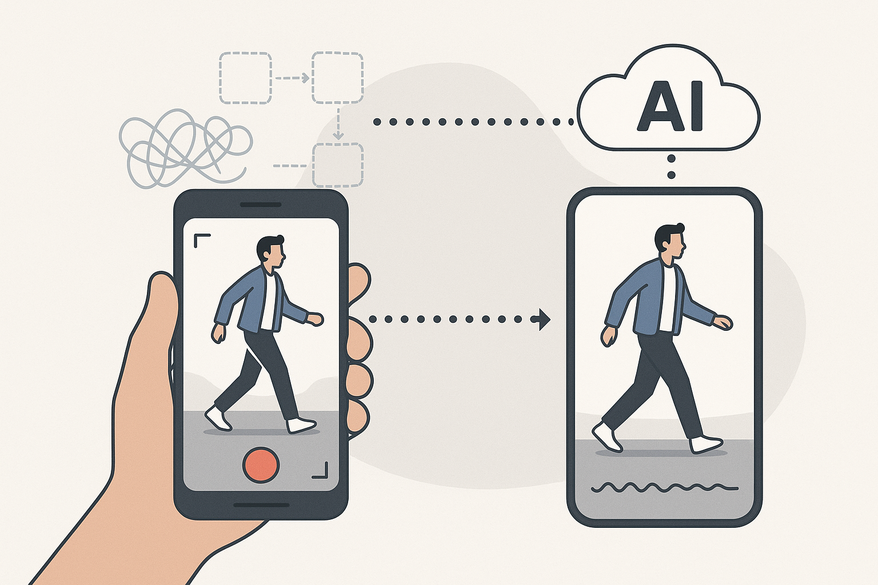
Figure 1: Before and After AI Video Stabilization
In this post, you will learn:
- How AI video stabilization mobile works
- Key benefits for casual and pro creators
- Real-world use cases and case studies
- Criteria for choosing top solutions
- Future trends in mobile stabilization
Section 1: Understanding Video Stabilization Mobile
Keyword: video stabilization mobile
Video stabilization corrects unwanted camera motion—jitters, wobbles, shakes—to improve watchability and cut down on re-shoots or manual edits.
- Basic digital stabilization crops and shifts frames to reduce visible motion (Kapwing).
- Optical image stabilization (OIS) uses tiny gyros and motors inside lenses to counteract shake.
Why mobile needs AI:
- Smartphones rely on limited OIS or electronic image stabilization (EIS).
- AI adds software-level corrections beyond hardware limits (Pippit).
- Frame-by-frame motion analysis anticipates and smooths erratic movement.
Traditional vs. AI enhancement:
- OIS/digital cropping: fixed axis adjustments, limited by hardware inertia.
- AI stabilization: multi-axis, automatic algorithms that detect visual features and gyroscope data for dynamic correction (CapCut).
Section 2: How AI Video Stabilization Works on Mobile Devices
Keyword: mobile video stabilization technique
AI video stabilization mobile relies on three core steps:
- Motion Detection
• Gyroscope data tracks device rotation and tilt in real time.
• Visual feature tracking analyzes common points across frames to spot and quantify shake (CapCut).
• Hybrid methods fuse sensor and pixel data for robust shake detection. - Image Processing Algorithms
• ML models predict the ideal camera path, re-centering frames while preserving edges and subject integrity (Pippit).
• Advanced neural networks identify and isolate moving objects to avoid warping important details.
• Example: CapCut’s Dreamina Seedance 2.0 automatically smooths walking or running footage with minimal cropping. - Real-Time Corrections
• On-device GPUs or cloud servers apply stabilization instantly, outputting high-quality MP4/MOV files without artifacts.
• Frame interpolation and motion compensation maintain smooth motion even in fast pans.
Section 3: Benefits of AI Video Stabilization Mobile
Keyword: benefits of AI stabilization
- Improved Video Quality
– Smoother, gimbal-like stability for walking or handheld shots (StabCam).
– Eliminates jitter and rolling shutter artifacts. - Reduced User Error
– One-click fixes remove the need for manual keyframing or reshoots.
– Lowers barrier to entry for novices who lack editing skills (Kapwing). - Efficiency & Speed
– Cuts editing time from hours to minutes.
– Speeds up social media content workflows for daily vlogs or news clips.
Section 4: Real-World Applications of AI Video Stabilization Mobile
Keyword: real-world AI stabilization
Case Study 1: Pippit for Walking/Panning Footage
Creators use Pippit to stabilize handheld tours and demos in post (Pippit), preserving color, detail, and pace.
Case Study 2: CapCut for Dynamic Vlogs
Dreamina Seedance 2.0 leverages gyroscope AI to smooth running and sports clips instantly (CapCut), ideal for travel and action content.
Section 5: Choosing the Right Mobile Stabilization Apps
Keyword: best mobile stabilization apps
Selection Criteria:
- Performance: GPU speed, live preview, processing time.
- Ease-of-Use: One-click interfaces, browser vs. native app.
- Feature Set: Vertical format support, denoising, color grading, editing suite.
Section 6: Future of Mobile Video Stabilization
Keyword: future of mobile video stabilization
- AR/VR Integration
AI frame correction will stabilize 360° and VR footage for immersive experiences. - Predictive Machine Learning
Next-gen models will anticipate device motion before capture to eliminate shake proactively. Check out our guide on AI Video Upscaling Mobile for related enhancements. - Cloud GPU & Auto-Editing
By 2026, cloud-based pipelines will blend stabilization with auto color-grading and montage creation.
Conclusion
AI video stabilization mobile transforms shaky smartphone footage into pro-level clips through frame-by-frame AI analysis, real-time corrections, and advanced ML models. We covered how it works, the benefits, key use cases, tool selection criteria, and future trends. Both casual creators and professionals can now capture smooth, engaging videos without bulky gear. Try top tools like Pippit, Google Photos, and CapCut to elevate your next mobile video project. Explore mobile video stabilization tools today to see the difference AI can make in your clips.
For creators looking to automate the creation and clipping of engaging video moments, consider Vidulk - AI Video Clipping App. Vidulk’s on-device AI Studio helps turn your stabilized footage into shareable clips instantly.
Cuando se busca una camiseta de club, es útil comparar medidas, corte y detalles de confección antes de decidir. Para ordenar la búsqueda, equipacion del Manchester City puede revisarse junto con las medidas y el tipo de ajuste preferido. También conviene revisar las condiciones descritas para evitar confundir estilo, talla y comodidad.
FAQ
- What is AI video stabilization on mobile?
- It uses machine learning and sensor data to reduce unwanted camera motion and deliver smoother clips without hardware mounts.
- Do I need a powerful device or cloud services?
- Many apps offer on-device GPU processing, but some options leverage cloud servers for heavier tasks and faster results.
- How much cropping occurs during stabilization?
- Modern AI methods minimize cropping by predicting camera paths, though minor edge trimming may occur to eliminate artifacts.
- Can I apply AI stabilization to existing footage?
- Yes, most tools let you import recorded videos and stabilize them in post-production with one-click workflows.