Split Lecture Videos into Short Segments with AI Clipping
Learn how to split lecture videos into short segments using AI. Discover clipping, cropping, captions, and repurposing tips with Vidulk.

Estimated reading time: 18 min
Key Takeaways
- Splitting lecture videos into short segments improves engagement and aids learning by making content more focused and easier to digest.
- AI-powered tools like Vidulk automate clipping, captioning, cropping, and formatting to create social-ready, engaging clips efficiently.
- Multiple splitting methods exist, including timestamps, equal-length segments, AI-driven topic detection, and manual cuts to suit different content types.
- Export clips in versatile formats with customizable quality, lossless options, and batch export capabilities for streamlined workflows.
- Repurpose various content types such as podcasts, interviews, YouTube videos, and live streams into viral shorts effortlessly, expanding reach and engagement.
Table of Contents
- Section 1: Why Split Lecture Videos into Short Segments?
- Section 2: Methods to Split Lecture Videos Efficiently
- Section 3: AI Video Clipping for Best Moments Selection
- Section 4: Editing and Enhancing Clips After Splitting
- Section 5: Exporting and Sharing Your Segmented Clips
- Section 6: Use Cases and Platforms for Split Lecture Clips
- Conclusion
- FAQ
Section 1: Why Split Lecture Videos into Short Segments?
Improving Engagement and Retention
Long lecture videos often challenge viewers’ ability to maintain focus, as attention spans typically wane after just a few minutes of continuous viewing. Research in educational psychology indicates that breaking down complex information into smaller chunks—also known as "chunking"—can significantly enhance cognitive processing and memory retention. By splitting lengthy lectures into short, focused segments, educators help learners absorb one concept at a time, minimizing cognitive overload.
For example, a 60-minute lecture can be segmented into 6 to 12 clips of 5 to 10 minutes each, allowing learners to engage with manageable portions during study sessions. This segmentation enables better recall because learners can revisit specific topics easily without re-watching irrelevant parts. Additionally, short segments reduce the likelihood of disengagement caused by fatigue or distractions.
Facilitating Modular Learning
Modular learning is an instructional design approach that breaks content into independent units or modules, which learners can consume in any order or according to their individual needs. Splitting lecture videos into short segments perfectly aligns with this strategy, enabling educators to create a flexible curriculum where each clip serves as a standalone learning module.
This modular approach supports differentiated instruction by allowing students to focus on areas where they need improvement without sifting through the entire lecture. For example, if a lecture covers five chapters, each can be divided into separate clips, which learners can access on-demand for review or preparation before exams. It also simplifies content updates—educators can replace or revise specific clips without re-recording the entire lecture.
Boosting Social Media Reach
In today’s digital landscape, social media platforms prioritize short, engaging video content, particularly in vertical formats optimized for mobile devices. Platforms like TikTok, Instagram Reels, and YouTube Shorts have popularized bite-sized videos that autoplay silently with captions, making accessibility and visual clarity essential.
By splitting lecture videos into short, captioned segments optimized for vertical viewing (typically 9:16 aspect ratio), creators can tap into these platforms’ algorithms favoring high engagement clips. For instance, a 10-minute lecture segment showcasing a key insight or a compelling example can become a viral clip that attracts viewers beyond the traditional academic audience. This repurposing not only extends the life and reach of educational content but also drives traffic back to full-length videos or courses.
Section 2: Methods to Split Lecture Videos Efficiently
Splitting by Timestamps or Markers
One of the most accurate ways to segment lectures is by leveraging predefined timestamps or chapter markers that correspond to topic changes or slide transitions. Many modern lecture capture systems and video platforms allow instructors to embed timestamps during recording or post-production, outlining key sections such as "Introduction," "Theory," "Examples," and "Summary." When these timestamps are imported into video clipping software like Vidulk, the tool can automatically split the video at these exact moments, ensuring clips align perfectly with content structure.
- Manual entry: In cases where timestamps are not embedded, users can manually input timecodes based on lecture notes or video scrubbing to mark segment boundaries.
- Metadata markers: Some video files contain embedded chapter markers that editing tools can recognize and use for clipping.
- Best for: Well-structured lectures with clear, logical chapter divisions, such as university courses or corporate training sessions.
For example, a 45-minute lecture with 5 chapters can be split at the exact start times of each chapter, creating clips that correspond directly to the curriculum.
Splitting into Equal-Length Segments
When lectures lack clear topic breaks or when content uniformity is preferred, dividing the video into equal-length segments simplifies production and consumption. This approach is also useful for content creators who need to batch process multiple videos quickly without detailed manual input.
- Choosing segment length: Typical segment durations range from 3 to 10 minutes, depending on platform constraints and audience preferences. For instance, TikTok clips often perform best under 60 seconds, while YouTube Shorts allow up to 60 seconds, and Instagram Reels up to 90 seconds.
- Batch processing: Splitting by equal parts enables automated workflows where multiple lectures or long videos can be segmented consistently without individual editing.
For example, a 50-minute lecture can be split into ten 5-minute clips, each suitable for quick viewing sessions or social sharing.
Automatic Topic or Scene Detection
Emerging AI technologies analyze video content to detect natural breaks, scene changes, or topic shifts, providing intelligent segmentation without manual intervention. Vidulk leverages machine learning models that process audio cues (e.g., pauses, emphasis), visual changes (e.g., slide transitions, speaker movement), and speech content to identify logical cut points.
- Speech analysis: Detects changes in subject matter or speaker emphasis using natural language processing and voice tone analysis.
- Visual cues: Recognizes slide changes, scene transitions, or on-screen text alterations signaling a new topic.
- Reduced editing time: Automates segmentation for large volumes of content with minimal manual input, ideal for creators repurposing podcasts or webinars.
- Improved relevance: Ensures clips correspond to meaningful content blocks, enhancing viewer satisfaction.
This AI-driven approach is especially valuable for unstructured content like interviews, panel discussions, or live streams where manual timestamps are unavailable.
Section 3: AI Video Clipping for Best Moments Selection
How AI Identifies Key Moments
AI-powered video clipping integrates multiple technologies such as natural language processing (NLP), computer vision, and audio analysis to pinpoint the most compelling or informative moments within a video. This is crucial for content like podcasts or interviews, where spontaneous insights or emotional peaks create high engagement.
- Audio analysis: Detects changes in speech tone, volume, and pace to identify emphatic statements or emotional highlights.
- Keyword extraction: NLP algorithms scan transcripts for important terms or phrases signaling topic shifts or key ideas (e.g., "important," "key takeaway," "summary").
- Visual scene detection: Identifies slide changes, speaker gestures, or on-screen annotations indicating new points.
- Caption generation: Automatically transcribes speech into captions, increasing accessibility and enabling silent autoplay.
For example, in a podcast discussing climate change, AI may highlight moments where the guest shares impactful statistics or personal anecdotes, generating clips that resonate with viewers.
Benefits of Using AI for Clipping
AI tools like Vidulk streamline video editing workflows and enhance clip quality by:
- Automated cropping: Converts horizontal videos into vertical or square formats optimized for mobile devices without manual framing.
- Captioning: Adds accurate, synchronized captions with customizable styles to boost engagement on muted autoplay platforms.
- Engagement optimization: Suggests clips with the highest predicted viewer interest based on speech and visual cues, increasing viral potential.
- Time savings: Eliminates labor-intensive manual editing, allowing creators to focus on content strategy.
Vidulk’s AI Clipping Features
Vidulk stands out by automating the entire clip creation pipeline. Users simply paste a video URL—such as a podcast episode, lecture, or interview—into Vidulk’s interface. The AI then analyzes the content, selects best moments, generates vertical clips with accurate captions, and formats them for social sharing.
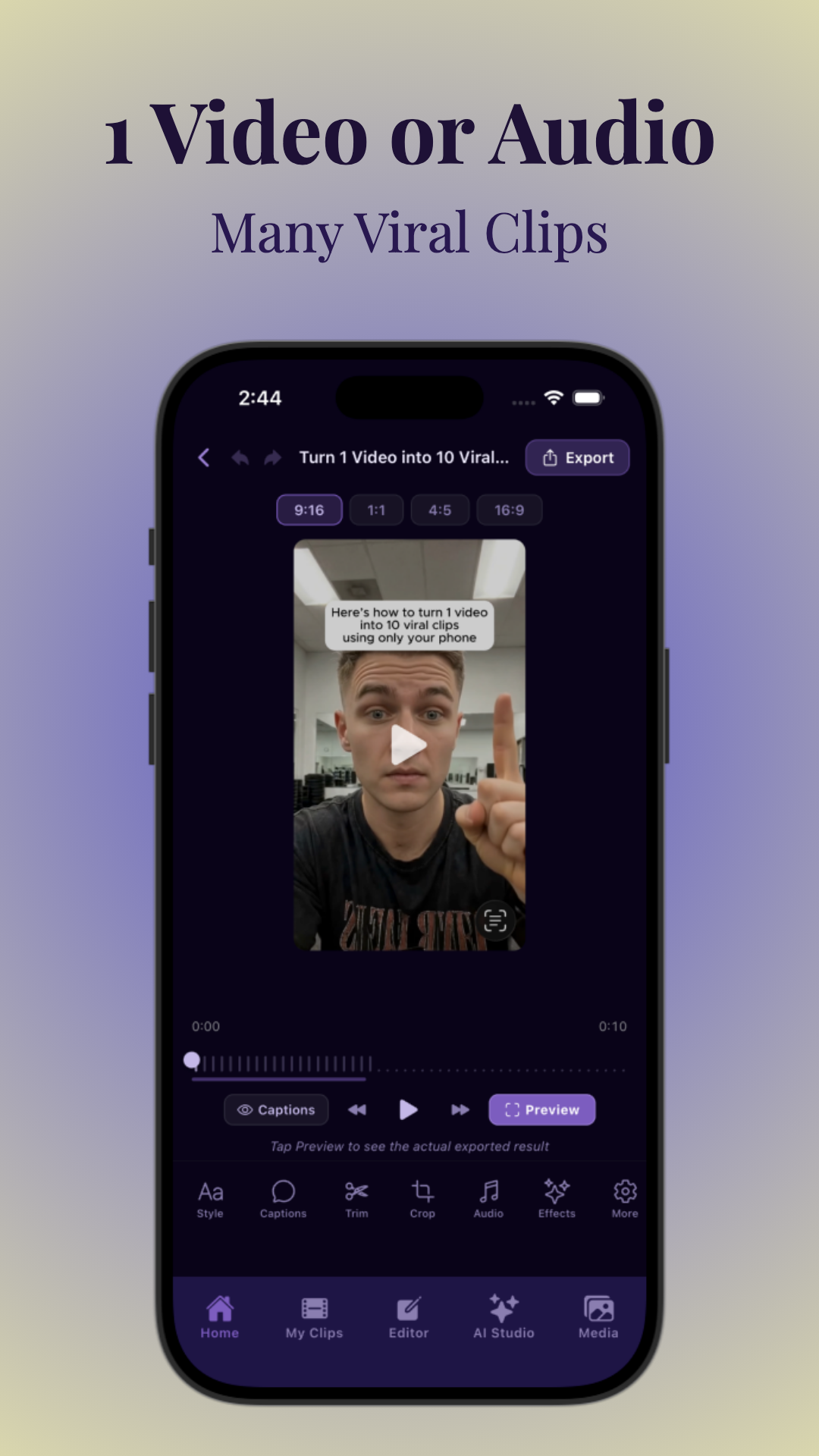
Vidulk also allows users to manually adjust suggested clips, customize captions, and export in preferred formats, combining AI efficiency with creative control.
For a deeper understanding of AI clip generation, see the detailed guide: AI Clip Generator: Transform Long Videos Into Viral Shorts.
Section 4: Editing and Enhancing Clips After Splitting
Trimming and Reordering Segments
Once clips are created, post-processing ensures each segment is polished and engaging. Trimming removes unnecessary content such as long pauses, filler words ("um," "like"), or off-topic tangents, sharpening the message.
- Fine-tuning: Use Vidulk’s timeline editor to trim start and end points precisely, avoiding abrupt cuts or awkward silences.
- Reordering: Rearrange clips to create a logical narrative or emphasize key ideas, especially when splitting was based on equal-length segments rather than topic breaks.
- Combining clips: Merge related segments to form a longer clip if needed, balancing brevity with content completeness.
For example, if a clip starts with an off-topic introduction, trimming can shift the start point directly to the main subject, improving viewer retention.
Adding Captions and Visual Enhancements
Captions are essential for accessibility, helping viewers who are deaf or hard of hearing, and those watching without sound. Vidulk’s AI-generated captions can be customized extensively:
- Font style and size: Match your brand identity or improve legibility.
- Positioning: Adjust caption placement to avoid overlapping important visuals or speaker faces.
- Color and background: Use contrasting colors or semi-transparent backgrounds for clarity on various content.
In addition, Vidulk supports adding:
- Transitions: Smooth fade-ins, outs, or slide transitions between clips or scenes enhance professionalism.
- Overlays and highlights: Text boxes, arrows, or animated graphics can emphasize key points or callouts.
- AI-generated images: Create thumbnails, backgrounds, or lower-thirds using Vidulk’s AI Studio, making clips visually appealing and consistent.
Cropping and Formatting for Platforms
Video format matters greatly for platform optimization. Vertical videos (aspect ratio 9:16) take up maximum screen space on mobile devices, increasing viewer attention. Vidulk automates this cropping process, intelligently framing subjects or slides to avoid cutting off important content.
- Format support: MP4 export with H.264 codec ensures compatibility across social and learning platforms.
- Quality modes: Choose between fast processing for quick sharing or lossless modes to preserve original video fidelity.
- Platform presets: Automatically adjust resolution and bitrate settings optimized for Instagram Reels (1080x1920, max 30 seconds), TikTok (max 60 seconds), or YouTube Shorts.
By tailoring clips to platform specifications, creators maximize content reach and avoid rejections or playback issues.
Section 5: Exporting and Sharing Your Segmented Clips
Export Formats and Quality Settings
Export options impact how clips perform on various devices and platforms. MP4 remains the industry standard due to its balance of quality and compression.
- Individual vs batch export: Export single clips for targeted sharing or multiple clips as a ZIP archive to streamline bulk uploads.
- Audio quality: Maintain original audio fidelity or apply AI-driven noise reduction to improve clarity, especially for recordings with background noise.
- File size considerations: Balance high resolution with manageable file sizes to accommodate platform upload limits and viewer bandwidth.
- Direct uploads: Vidulk supports sharing clips directly to mobile devices or social media platforms via integrated APIs, reducing manual transfer steps.
Sharing on Social and Learning Platforms
Short lecture clips find diverse audiences across platforms:
- Instagram Reels, TikTok, YouTube Shorts: Reach younger, mobile-first audiences with snackable educational content optimized for viral spread.
- Course management systems (LMS): Upload modular clips to platforms like Moodle, Canvas, or Blackboard, enabling structured learning and easy review.
- Streaming platforms and podcasts: Repurpose long-form content by distributing clips on Spotify video podcasts, Twitch highlights, or LinkedIn Learning to extend shelf life.
Creators should tailor captions, hashtags, and descriptions for each platform’s audience to maximize visibility and engagement.
Privacy and No-Upload Workflows
Data privacy is paramount for many educators and content creators, especially when working with sensitive or proprietary material. Vidulk supports on-device video processing workflows, allowing users to split, edit, and export videos locally without uploading them to cloud servers.
- Local AI processing: Enables clipping and editing while maintaining full control over raw video files.
- Secure storage: Users can choose encrypted storage options to protect content from unauthorized access.
- Compliance: Helps institutions meet data protection regulations such as GDPR or FERPA by minimizing cloud exposure.
This approach provides peace of mind for corporate trainers, academic institutions, and individual creators concerned about confidentiality.
Section 6: Use Cases and Platforms for Split Lecture Clips
Repurposing Podcasts and Interviews
Podcasts and interviews often contain spontaneous, insightful moments that are ideal for creating engaging short clips. Splitting these recordings into highlights with captions enables creators to generate snackable content that attracts new listeners and promotes full episodes.
For example, a 90-minute podcast can yield 10–15 short clips focusing on key questions, guest stories, or surprising facts. Shared on social media, these clips drive audience interest and subscription growth.
Transforming YouTube Videos into Shorts
Long YouTube videos can be repurposed into vertical shorts to capitalize on trending formats and algorithm preferences. Vidulk’s AI clipping identifies the video’s best moments—such as demonstrations, key takeaways, or entertaining segments—and crops them into vertical clips ready for TikTok or Instagram.
This repurposing allows creators to leverage existing content, increase brand exposure, and attract viewers who prefer short-form content, ultimately funneling traffic back to the original videos.
Turning Streams into Clips
Live streams can be several hours long, making them difficult for casual viewers to consume fully. Splitting streams into topical clips or highlights—such as Q&A sessions, tutorials, or funny moments—makes content more accessible and shareable.
For example, a 3-hour coding stream can be segmented into clips demonstrating specific functions or problem-solving steps. These clips can be shared on YouTube, Twitch highlights, or social media to maintain engagement long after the live event.
Educational and Corporate Training Modules
Educational institutions and corporations benefit from breaking lengthy training sessions into focused modules. This segmentation facilitates targeted learning, allowing employees or students to complete training in shorter sessions aligned with their schedules.
For instance, a 2-hour compliance training video can be divided into 12 clips covering individual policies, making it easier to update parts of the training as regulations change without re-recording the entire course.
Discover detailed workflows for making AI video clips in this comprehensive tutorial: How to Make AI Video Clips: A Step-by-Step Guide.
Conclusion
Splitting lecture videos into short segments is a strategic approach that enhances viewer engagement, facilitates modular learning, and unlocks new distribution channels across social and educational platforms. By leveraging AI video clipping tools like Vidulk, creators can automate complex editing tasks—such as detecting best moments, adding captions, and cropping for vertical formats—saving time and improving content quality.
Whether repurposing podcasts, YouTube videos, live streams, or corporate training materials, adopting intelligent segmentation enables the production of viral, accessible, and modular content that meets today’s diverse audience needs.
Ready to transform your long videos into viral clips? Try Vidulk today and experience AI-powered clipping that saves time and boosts reach.
FAQ
Q: How do I split a lecture video into short segments online?
A: Use AI-powered video clipping apps like Vidulk. Upload your lecture video or paste a URL, and the AI automatically detects topic changes or best moments. It then splits the video into short, captioned clips ready for download or sharing, significantly reducing manual editing effort.
Q: What is the easiest way to cut a long lecture into chapters?
A: The easiest method is to use clipping tools that accept timestamps or automatically detect scene changes using AI. These apps segment your lecture based on embedded markers, slide transitions, or topic shifts without requiring manual cutting.
Q: Can I split a lecture video into equal-length parts automatically?
A: Yes. Many video editors and AI clipping apps provide features to divide videos into fixed-duration segments. This is useful for batch processing and ensures consistent clip lengths, which are ideal for social sharing and predictable viewing sessions.
Q: How do I split a video by timestamps or topic changes?
A: You can manually input timestamps based on your lecture outline, or use AI tools that analyze audio and visuals to detect topic shifts automatically. This ensures clips correspond to meaningful content breaks, improving viewer comprehension.
Q: What format do split lecture clips export in?
A: The most common export format is MP4, supported by all major social and learning platforms. Apps like Vidulk offer customizable quality settings and support exporting clips individually or as ZIP archives for batch uploads.
Q: Can I split a lecture video without losing quality?
A: Yes. Using lossless export options in video editing apps preserves the original video quality. Some AI clipping tools also offer fast and lossless processing modes, allowing you to balance speed and visual fidelity based on your needs.
Free to start
Try the Vidulk app
Everything in this guide, in your pocket.
Get it on iPhoneGet it on Android