Using AI to Speed Up Content Creation: The Ultimate Guide to Repurposing Video Clips
Learn how to use AI to speed up content creation, batch content, repurpose videos into viral clips, and post more consistently for TikTok growth.


Estimated reading time: 18 min
Key Takeaways
- Using AI to speed up content creation enables faster, consistent posting with less manual effort, freeing creators to focus on strategy and creativity.
- Content batching and repurposing long videos into multiple short clips drives engagement and growth on platforms like TikTok by maximizing content lifespan and reach.
- AI tools like Vidulk automate video clipping, captioning, thumbnail creation, and formatting for viral-ready content that fits platform-specific requirements.
- Maintaining a clear content creation workflow, including batch production and scheduled posting cadence, is key to sustained audience growth and improved virality chances.
- Strategic use of AI combined with human editing ensures content quality, brand consistency, and authenticity, which AI alone cannot guarantee.
Table of Contents
- Section 1: What Is Using AI to Speed Up Content Creation?
- Section 2: Content Batching and Workflow for Maximum Efficiency
- Section 3: Repurposing One Video Into Many Clips
- Section 4: How to Post More Consistently with AI Tools
- Section 5: How to Go Viral with Clips and Grow on TikTok
- Section 6: Integrating AI Into Your Content Creation Workflow
Conclusion
FAQ
Section 1: What Is Using AI to Speed Up Content Creation?
Understanding AI-Powered Content Creation
Using AI to speed up content creation involves leveraging artificial intelligence software to automate or simplify parts of the content production process, significantly reducing the manual workload for creators. For video creators, this means utilizing tools that can analyze long videos or audio files and automatically identify highlights, generate captions, and format clips optimized for sharing on social media platforms.
AI-powered content creation harnesses machine learning models trained on vast datasets to understand video and audio context, recognize speech, detect emotions or emphasis, and even suggest relevant thumbnails or titles. These capabilities enable creators to produce multiple content pieces from a single source with minimal manual intervention.
Why AI Makes Content Creation Faster
Traditional content creation tasks such as video editing, captioning, and formatting clips manually are often time-consuming, repetitive, and require specialized skills. AI accelerates these processes by:
- Automatically detecting key moments: AI algorithms analyze long videos or podcasts to identify segments with high engagement potential, such as punchlines, insightful explanations, or emotional reactions.
- Generating accurate captions and subtitles: AI-powered speech-to-text models transcribe audio quickly and with increasing accuracy, eliminating the need for manual transcription or third-party services.
- Formatting clips for multiple platforms: AI automatically adjusts aspect ratios (vertical, square, horizontal) and resolutions to fit requirements of platforms like TikTok, Instagram Reels, YouTube Shorts, LinkedIn, and Facebook.
- Automated thumbnail and title suggestions: Some AI tools analyze clips to propose engaging thumbnails or titles based on content sentiment and keywords.
This automation reduces hours of editing work to minutes, enabling creators to focus on ideation, storytelling, and distribution strategies rather than technical tasks.
Example: Vidulk’s AI Clipping App
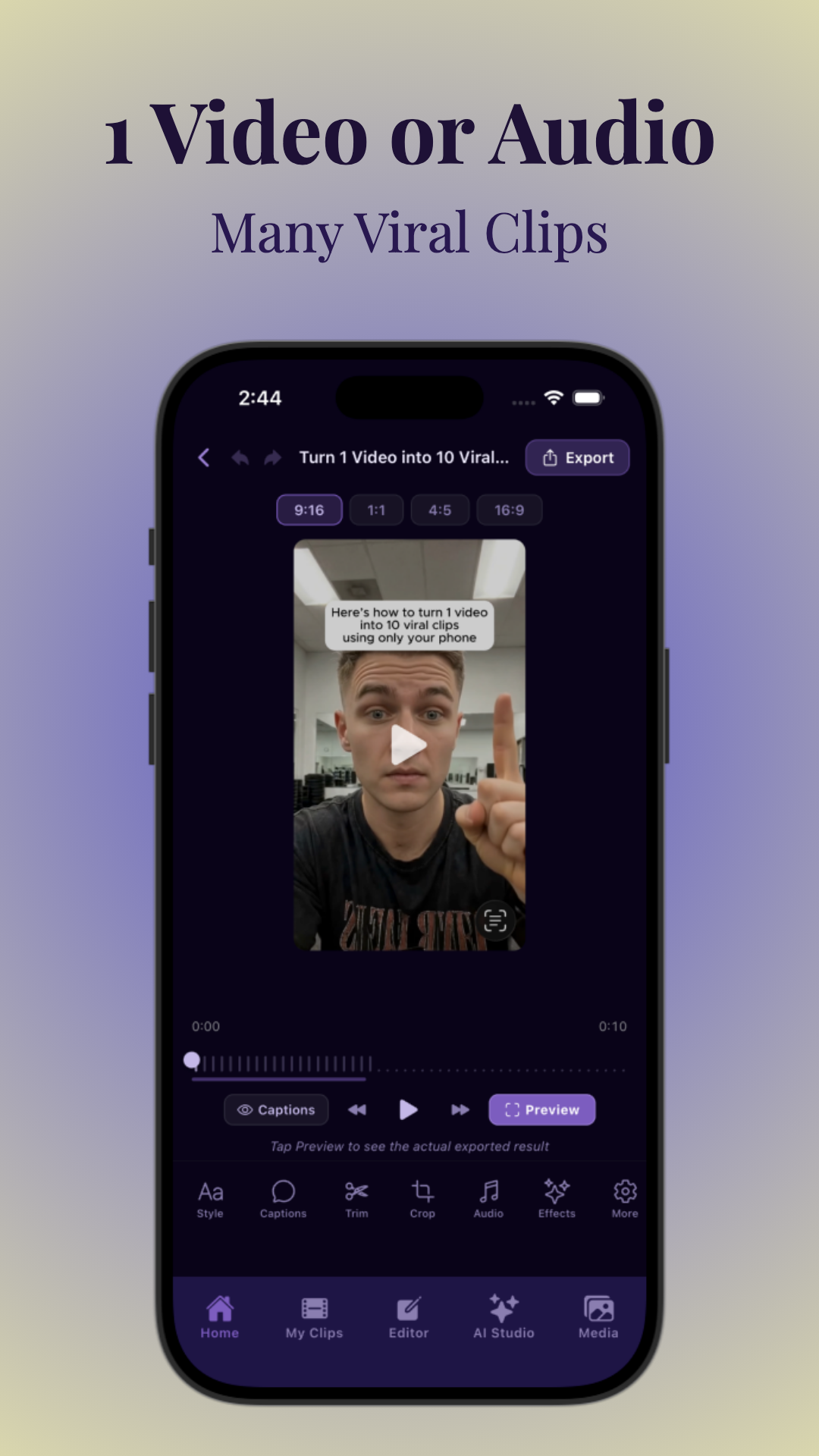
Vidulk is a mobile app designed to simplify and accelerate content creation by letting creators upload or paste a link to a long video or audio file. Its AI analyzes the content to detect engaging segments and automatically creates short, captioned, vertical clips optimized for social sharing. Vidulk also includes an AI Studio feature for generating and enhancing images directly on the device, adding an additional layer of creative speed and flexibility.
For example, a creator who records a 60-minute podcast episode can upload the audio or video file to Vidulk. Within minutes, the app generates 10–20 short clips with captions and appropriate formatting for TikTok or Instagram Reels. Creators can then review these clips, make minor edits if necessary, and schedule them for posting without needing extensive video editing skills.
Vidulk exemplifies how AI streamlines content creation from start to finish, turning one long-form video into multiple pieces of engaging, platform-ready content with minimal manual effort. This capability is particularly valuable for solo creators or small teams looking to scale their output efficiently.
Section 2: Content Batching and Workflow for Maximum Efficiency
What Is Content Batching?
Content batching is a productivity technique where creators focus on producing multiple pieces of content in one dedicated session instead of spreading tasks out daily. This approach leverages momentum, reduces cognitive load, and minimizes time lost to context switching between creative and technical activities.
For example, instead of recording one podcast episode per day and editing it immediately, a creator might record five episodes in one day, then spend a separate session editing all five. This separation of tasks enables deeper focus and often results in higher-quality output.
How Batching Works With AI Tools
AI tools integrate seamlessly into batching workflows by automating repetitive steps such as clipping, captioning, and formatting at scale. Here is a sample batching workflow using AI:
- Batch recording: Schedule a single day or block to record multiple long-form videos or podcasts. For example, record 3–5 episodes or videos in one session to maximize efficiency.
- AI batch processing: Upload all recorded videos or audio files simultaneously to an AI clipping app like Vidulk. The AI automatically extracts dozens of highlight clips across all files within minutes.
- Batch editing and review: Quickly review generated clips in bulk, customize captions, tweak thumbnails, or add branding elements. This can often be done more rapidly than creating content from scratch.
- Scheduled publishing: Use social media scheduling tools such as Buffer, Later, or native platform schedulers to queue clips for consistent release over days or weeks, ensuring steady audience engagement.
Benefits of Batching with AI
- Consistency: Batching supports a steady posting cadence, which algorithms on platforms like TikTok and Instagram reward with better reach and engagement.
- Time savings: AI removes bottlenecks in editing and formatting, reducing post-production time from hours to minutes per video.
- Higher output: Extracting multiple clips from each source video increases content volume, creating more opportunities to engage different audience segments with varied topics or styles.
- Stress reduction: By batching content creation, creators avoid daily pressure and creative burnout, allowing better focus on quality and strategy.
- Improved analytics: Publishing content in batches enables easier tracking of performance trends and faster iteration of content strategy based on data.
Overall, combining batching with AI-powered automation is a powerful way to scale content production without sacrificing quality or increasing workload disproportionately.
Section 3: Repurposing One Video Into Many Clips
Why Repurpose Content?
Repurposing content transforms one long-form video into multiple short, shareable clips that can be distributed across various platforms. This approach maximizes the value of original content, extends its lifespan, and allows creators to maintain fresh social feeds without constantly generating new material.
For example, a 60-minute webinar can yield 15–30 short clips highlighting key takeaways, funny moments, or audience Q&A segments. Those clips can then be posted as TikTok videos, Instagram Reels, LinkedIn posts, or even embedded in newsletters. Repurposing empowers creators to reach different audience segments who prefer shorter, snackable content over long-form videos.
How AI Facilitates Repurposing
AI tools analyze video and audio content to identify moments with high engagement potential, such as:
- Funny or surprising reactions that generate emotional responses.
- Insightful or actionable points that provide value.
- Quotable soundbites that are easily shareable.
- Audience interaction segments like questions or testimonials.
Once identified, AI automatically creates short clips optimized for social sharing by:
- Auto-captioning: Generating accurate captions improves accessibility, watch time, and engagement, particularly on platforms where videos autoplay muted.
- Vertical formatting: Cropping or resizing videos to vertical (9:16) or square (1:1) aspect ratios ensures clips display natively on mobile-focused apps like TikTok and Instagram.
- Thumbnail and title suggestions: AI can propose eye-catching thumbnails and descriptive titles or hashtags to maximize clicks and shares.
Practical Repurposing Workflow
- Upload or paste your long video into an AI clipping app such as Vidulk.
- Allow the AI to detect and generate multiple clips automatically, typically within minutes depending on video length.
- Review the AI-generated clips, customize captions, add branding elements like logos or colors, and adjust clip length if needed.
- Schedule clips for posting over days or weeks to maintain a steady presence without overwhelming your audience.
- Track engagement metrics such as views, likes, shares, and comments to analyze which clips perform best.
- Iterate on clip selection and posting schedules based on this data to maximize reach and virality.
By repurposing effectively and using AI automation, creators can exponentially increase their content output and presence across platforms while focusing on quality and relevance.
Section 4: How to Post More Consistently with AI Tools
Challenges of Consistent Posting
Many creators struggle to maintain a regular posting schedule due to time constraints, lack of resources, or creative burnout. Inconsistent posting often leads to reduced audience engagement, loss of followers, and lower favorability in platform algorithms.
Consistency is crucial because social media algorithms tend to reward creators who post frequently and engage regularly with their communities. Missing posting deadlines or gaps in content can result in decreased visibility, making it harder to grow audience size.
How AI Helps Maintain Posting Cadence
AI-powered clipping and batch processing enable creators to prepare weeks’ worth of content in just a few focused sessions. This content bank acts as a buffer, allowing creators to schedule posts in advance and avoid daily last-minute content creation stress.
- Automated captioning: AI drastically cuts down time spent creating captions by generating them automatically, including punctuation, speaker labels, and timestamps if needed.
- Multi-format clips: From one source video, AI tools generate clips optimized for different platforms (e.g., 9:16 vertical for TikTok, 1:1 square for Instagram), enabling cross-platform consistency without extra work.
- Content calendars integration: Many AI tools integrate with popular scheduling platforms (e.g., Buffer, Hootsuite, Later), streamlining the entire publishing pipeline from creation to distribution.
- Smart scheduling suggestions: Some AI platforms analyze audience activity data and suggest optimal posting times to maximize reach and engagement.
Example Strategies
- Batch create and schedule 10–20 clips weekly using AI tools like Vidulk to ensure a steady stream of content without daily effort.
- Repurpose one podcast episode into 5–10 clips spread over two weeks, targeting different themes or topics to appeal to various audience segments.
- Use AI to generate captions and hashtags optimized for each platform’s trending topics and search algorithms, improving discoverability.
- Build a monthly content calendar that aligns clips with relevant events, holidays, or product launches for maximum impact.
- Reserve time weekly for reviewing analytics and adjusting content strategies based on performance data.
These practices help creators post more consistently, improving algorithmic favor and audience engagement while reducing stress and workload.
Section 5: How to Go Viral with Clips and Grow on TikTok
Understanding What Makes Clips Go Viral
Short clips that go viral often share common characteristics such as strong hooks, emotional impact, clear messaging, and native formatting. Successful clips grab viewer attention within the first 1–3 seconds, maintain engagement throughout, and encourage interactions like shares or comments.
Key viral elements include:
- Strong hooks: Opening with a surprising fact, question, or visually compelling moment that immediately draws viewers in.
- Emotional resonance: Content that evokes laughter, awe, inspiration, or curiosity tends to be shared more frequently.
- Concise messaging: Clear, focused clips with a single takeaway or punchline perform better than long, unfocused videos.
- Native formatting: Vertical, full-screen videos with captions optimize viewing experience on mobile devices.
- Timeliness and trends: Leveraging trending sounds, hashtags, or challenges can boost discoverability.
Using AI to Craft Viral Clips
- Hook detection: AI analyzes video content to pinpoint engaging openings or highlights that capture attention instantly.
- Captioning and subtitles: Automated captions improve watch time since many users watch videos muted; readable text keeps viewers engaged.
- Optimized video length: AI clips typically range from 15–30 seconds, the sweet spot for TikTok’s algorithm favoring concise, impactful content.
- Vertical format: Ensures clips display perfectly on mobile feeds, increasing completion rates and shares.
- Adaptive content suggestions: Some AI tools recommend adding trending music, stickers, or effects to enhance virality potential.
Growing on TikTok via Repurposed Clips
By consistently posting AI-generated clips, creators can:
- Tap into TikTok’s algorithm that favors frequent, engaging content and rewards creators who post regularly.
- Reach niche audiences by highlighting different themes or topics extracted from a single long video, thus appealing to diverse interests.
- Leverage trending sounds or hashtags alongside repurposed content to increase discoverability and engagement.
- Build a recognizable brand voice and aesthetic through consistent use of AI-generated captions, graphics, and editing styles.
- Gather audience insights from engagement data to tailor future clips and optimize growth strategies.
For detailed tactics on transforming long videos into viral shorts, see AI Clip Generator: Transform Long Videos Into Viral Shorts.
Section 6: Integrating AI Into Your Content Creation Workflow
From Research to Publishing
AI enhances every stage of the content creation workflow, streamlining processes and helping creators maintain quality and relevance.
- Research: AI tools analyze trending topics, keyword search intent, and competitor strategies to inform content focus and avoid redundancy.
- Ideation and Outlines: AI-powered generators create topic ideas, suggest headlines, and build structured outlines, accelerating planning phases.
- Creation: AI clipping and editing tools automatically extract highlights, generate captions, and format videos for multiple platforms.
- Editing and Quality Control: Human review ensures brand voice consistency, checks for factual accuracy, and refines clips to fit audience preferences.
- Publishing and Scheduling: AI schedules posts according to optimal times, generates hashtags, and optimizes metadata to maximize reach.
Maintaining Brand Voice and Quality
While AI speeds up production, human oversight remains vital to maintain authenticity, accuracy, and emotional connection with audiences. Key practices include:
- Editing AI-generated clips: Adjusting captions for tone, adding personalized branding elements, and removing irrelevant content.
- Fact-checking captions and transcripts: Ensuring information accuracy to maintain credibility and avoid misinformation.
- Customizing formatting: Tailoring clip length, style, and visual design to align with brand guidelines and audience preferences.
- Setting clear AI parameters: Using AI tools with customizable settings to control clip selection criteria, caption style, and content sensitivity.
Measuring and Iterating
Tracking performance metrics of AI-generated clips is crucial to understanding what resonates with your audience. Important metrics include:
- Views and reach
- Watch time and completion rates
- Engagement metrics like likes, comments, shares, and saves
- Follower growth and retention rates
Use these insights to refine AI prompts, adjust clip selection criteria, and optimize posting schedules. Over time, this iterative process enhances content effectiveness and audience growth.
Integrating AI tools like Vidulk into your existing content marketing systems creates a seamless, scalable workflow that balances speed with quality and strategic focus. For a comprehensive guide, check out How to Make AI Video Clips: A Step-by-Step Guide.
Conclusion
Using AI to speed up content creation is a transformative approach for creators aiming to post more consistently, repurpose videos efficiently, and grow their audience — especially on visual-first platforms like TikTok. By combining AI tools such as Vidulk with strategic batching, repurposing workflows, and attentive human quality control, creators can produce viral-ready clips faster and with less effort.
This approach not only saves significant time but also unlocks new growth opportunities through steady engagement, enhanced reach, and viral potential. Creators of all sizes can benefit from adopting AI-powered workflows to scale their content marketing efforts while maintaining authenticity and brand integrity.
Embrace AI-driven content creation today to transform your workflow, accelerate your brand’s reach, and stay competitive in the fast-evolving creator economy.
FAQ
Q: What are the best AI tools for content creation?
A: Leading AI tools include Vidulk for automated video clipping and captioning, Jasper for AI-assisted writing and scripting, and Canva’s AI features for image generation and graphic design. These tools accelerate tasks like video editing, content scripting, and formatting, enabling creators to produce high-quality content faster.
Q: How do I use AI to create content faster?
A: Use AI to batch process your long videos or podcasts into short clips, generate captions automatically, and schedule posts using integrated tools. This approach reduces manual editing and speeds up content distribution, allowing you to focus on creative strategy.
Q: Can AI write blog posts that rank on Google?
A: Yes, AI can generate SEO-optimized draft content quickly. However, human editing is essential to ensure the content is accurate, engaging, and aligns with your brand voice, which improves ranking and reader trust.
Q: How do I keep AI content on brand and accurate?
A: Always review AI-generated content carefully, fact-check all information, and adjust language and tone to align with your brand’s personality before publishing. Incorporate human editing to maintain quality and authenticity.
Q: How do agencies use AI for content creation?
A: Agencies leverage AI to increase output through batch content creation, automate SEO research, clip repurposing, and scheduling, enabling them to serve more clients efficiently while maintaining consistent quality across projects.
Q: What content tasks should I automate with AI first?
A: Start by automating repetitive and time-consuming tasks such as video clipping, caption generation, thumbnail creation, and basic editing. This frees time for higher-level creative strategy and refinement.