How to Come Up With Video Ideas: The Ultimate Guide for Creators
Learn how to come up with video ideas for YouTube, TikTok, and Reels. Get proven methods to generate viral, faceless, and short-form content ideas that work.

Estimated reading time: 10 min
Key Takeaways
- Leverage analytics, audience feedback, and trending searches to discover video ideas that get views.
- Repurpose long videos with AI tools like Vidulk into viral short-form clips.
- Mix proven formats: faceless, listicles, comparison, and story-driven content for maximum impact.
- Validate ideas by checking search demand and competitor performance before you film.
- Build on top-performing topics by creating series or content clusters.
Finding how to come up with video ideas is the backbone of every successful creator—whether you’re making YouTube Shorts, faceless YouTube videos, viral TikToks, or Instagram Reels. In this guide, you’ll learn a repeatable process for generating scroll-stopping content ideas, proven short form formats, and how to use AI-powered tools like Vidulk to turn your concepts into viral clips. Let’s dive in and unlock your next content breakthrough.
Step 1: Mine Your Analytics for Winning Video Ideas
Your YouTube Studio and TikTok analytics are goldmines for discovering what your audience already loves. Start your ideation process by reviewing your highest-performing videos and noting patterns.
- Open YouTube Studio → Analytics → Content → Top Videos. Filter by last 28 days and lifetime.
- On TikTok, check your Profile → Analytics → Content for your top videos.
- Look for recurring topics, formats, hooks, or video lengths that consistently get views or engagement.
- Ask: Can you repeat the format with a new angle? Can you turn a hit video into a series or a cluster of related clips?
For a deeper dive into transforming long videos into viral shorts, see AI Clip Generator: Transform Long Videos Into Viral Shorts.
Step 2: Listen to Your Audience—Questions & Community
Some of the best content ideas for creators come directly from your viewers. Harness the power of your audience’s questions and pain points:
- Read comments on your videos, community posts, and Instagram DMs.
- Collect recurring questions or requests—these are proven demand-led topics.
- Scan support emails or Discord/Telegram groups for real audience problems.
- Use these insights to craft faceless YouTube video ideas, explainer reels, or TikTok tips. For inspiration, check out 12 Faceless YouTube Video Ideas for Viral Short-Form Content.
Turn questions into "How to..." videos, myth-busting shorts, or quick solution clips for instant relevance.
Step 3: Use YouTube Search Autocomplete & Trending Topics
YouTube’s search bar is a real-time window into what people are searching for right now:
- Type a keyword (e.g., “video ideas”, “faceless”, “TikTok tips”) and note the autocomplete suggestions.
- Scroll to the bottom of the search results for Related Searches.
- Plug these phrases into your video titles, hooks, or scripts to capture active demand.
- Check YouTube Studio → Analytics → Research → Your Viewers’ Searches for data-driven inspiration.
This method is perfect for generating short form video ideas, listicles, and comparison-style content (e.g., “X vs. Y”).
Step 4: Analyze Competitor Channels and Top Creators
Reverse-engineering what works for others in your niche can save you weeks of guesswork:
- Identify 3-5 top channels in your space. List their recent viral videos.
- Note formats: faceless narration, text-on-screen, storytime, or visual lists.
- Ask: Can you improve, remix, or update these topics for your unique style?
- Watch how they use hooks—then test similar hooks using Vidulk's Free Hook Generator or explore the best video hooks to instantly boost your short-form content.
Never copy—always add your twist, more depth, or a unique angle.
Step 5: Brainstorm with AI Tools and Idea Generators
Stuck in a creative rut? Let AI give you a jumpstart. Tools like Vidulk’s AI Studio can:
- Suggest viral video hooks and topic ideas based on your niche.
- Instantly repurpose long-form podcasts, interviews, or lectures into multiple short, captioned clips.
- Generate faceless content ideas, reels content ideas, and even image assets for thumbnails.
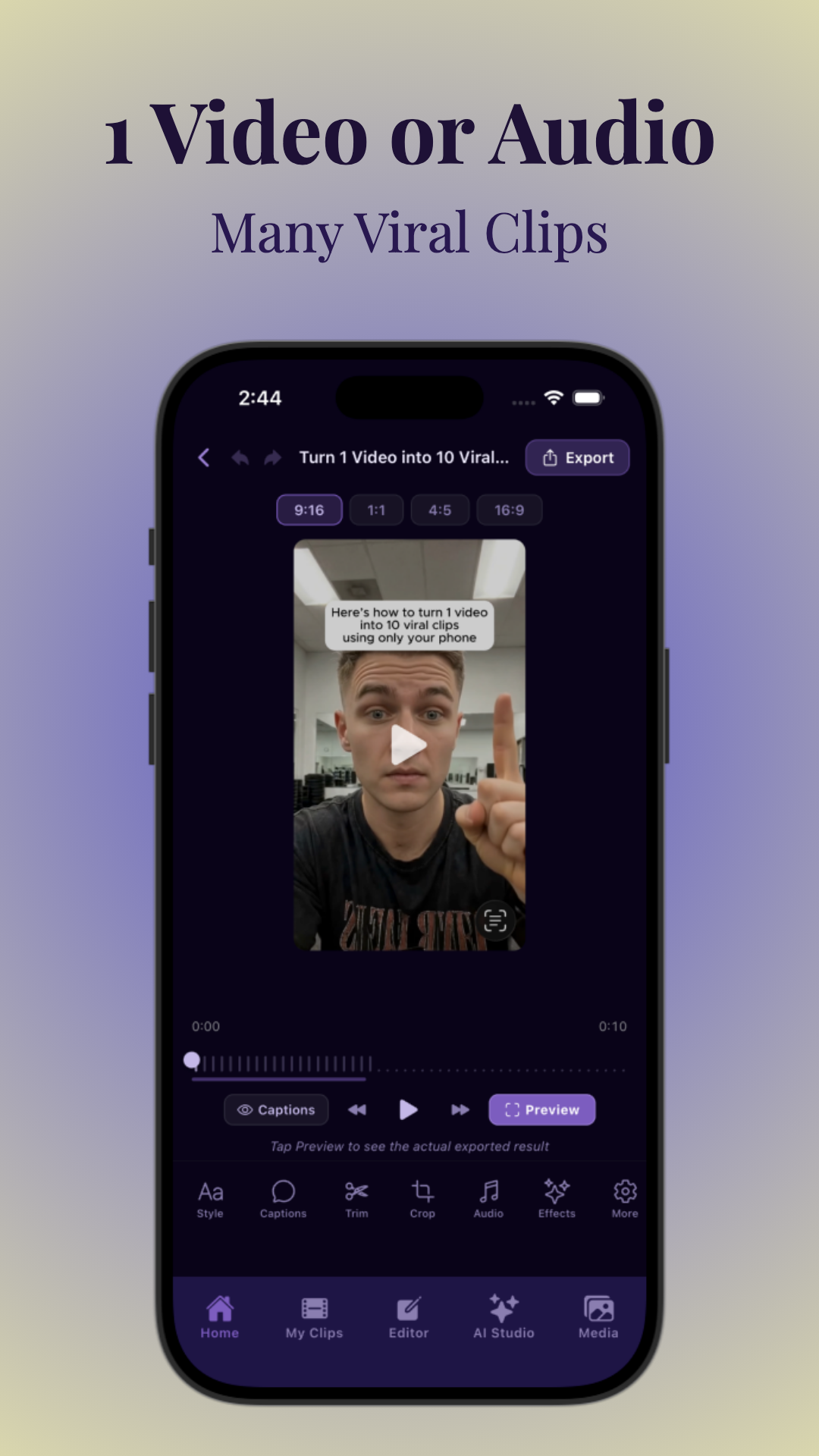
Try uploading your next podcast or video to Vidulk and see which moments the AI surfaces—you’ll often spot new angles you hadn’t considered.
Step 6: Refine Ideas with Search Demand & Competition Checks
Before investing time in filming, validate that your idea has real audience potential:
- Use YouTube’s Research tab to check if the topic has high search volume and low competition.
- Look for recent videos in your niche that have gone viral with similar angles.
- Test your video title and hook with friends, or in creator groups, to gauge interest.
- For ultra-fast validation, create a "teaser" short or poll your audience about which idea excites them most.
To see how AI can help you quickly iterate and refine video ideas, check out AI Video Clip Generator: Transform Long Videos with AI.
Step 7: Turn One Good Idea into a Series or Content Cluster
Don’t let a winning concept be a one-hit wonder—expand it into a series or cluster:
- Break down a broad topic into specific angles (e.g., "5 Mistakes Begging New Creators Make" becomes a series: "Mistake #1…", "Mistake #2…").
- Create comparison videos ("X vs. Y"), listicles, or "Do’s and Don’ts" around the same core idea. For more inspiration, see top content ideas for creators, including viral formats and short-form video inspiration.
- Bundle related shorts into a playlist for binge-worthy viewing.
For a step-by-step on turning long videos into a series of viral clips, see How to Make AI Video Clips: A Step-by-Step Guide.
Tips & Common Mistakes
- Don’t chase trends blindly: Always put your unique spin or expertise into trending topics.
- Avoid one-off viral attempts: Build evergreen content clusters for lasting growth.
- Don’t ignore your analytics: Your audience tells you what works—listen and adapt.
- Don’t overlook faceless formats: Text-on-screen, stock footage, and voiceover videos can perform just as well as talking head content.
- Always validate demand: A good idea without search volume or community interest is unlikely to go viral.
Conclusion
Learning how to come up with video ideas is a skill every content creator can master. By blending analytics, audience insight, search trends, creative brainstorming, and AI tools like Vidulk, you’ll never run out of short form video ideas, faceless YouTube concepts, or reels content ideas again. Remember: the best video hooks and viral clips start with knowing what your viewers want—then delivering it in a fresh, engaging way. Ready to turn your next idea into a viral short? Try Vidulk today.
FAQ
- How do I come up with YouTube video ideas that get views?
Review your top-performing videos in YouTube Studio, analyze audience comments and questions, and use YouTube’s Research/Explore tab to find high-demand, low-competition topics. Remix proven formats and validate with search data before filming. - How do I find video ideas from YouTube autocomplete?
Start typing your niche keywords into YouTube’s search bar and note the autocomplete suggestions. These are real-time, popular searches. Use them as video titles, hooks, or starting points for your next content piece. - How do I know what my audience wants to watch next?
Listen to your comments, community posts, and DMs for recurring questions or requests. Use analytics to see which topics and formats your viewers engage with most, then create related content or series around those themes. - How do I find video ideas from my channel analytics?
In YouTube Studio, go to Analytics → Content → Top Videos to see what’s resonating. Look for patterns in topics, formats, and hooks. Replicate and iterate on your most successful videos for consistent growth. - What are some easy ways to find video ideas in my niche?
Analyze competitor videos, use YouTube and TikTok search autocomplete, ask your audience directly, and try AI-powered idea generators like Vidulk’s AI Studio for inspiration. - How do I turn one good video idea into a series?
Break the topic into smaller subtopics, create comparison or "part 1, 2, 3" videos, and build content clusters or playlists around your main theme to keep viewers engaged and returning.