Best AI Clipping Software: Top Picks for Viral Video Creation
Discover the best AI clipping software for podcasts, interviews, gaming, and more. Compare accuracy, editing features, pricing, and workflow for viral video creation.


Estimated reading time: 14 min
Key Takeaways
- The best AI clipping software rapidly transforms lengthy videos into viral shorts for platforms like TikTok, YouTube Shorts, and Reels.
- Features to compare include AI highlight detection accuracy, caption styling, editing control, and export options.
- Top tools excel for different use cases: podcasts/interviews, gaming/reaction, advanced captioning, and value/budget workflows.
- Vidulk stands out for mobile-first, all-in-one AI clipping, automatic captioning, and direct publishing capabilities.
- Collaboration, localization, and pricing models vary by platform—choose based on your content and workflow needs.
Table of Contents
- Section 1: Overall Rankings and Best-For-Use-Case Breakdowns
- Section 2: AI Highlight Detection Quality and Accuracy
- Section 3: Workflow from Long Video to Shorts
- Section 4: Supported Content Types and Creator Workflows
- Section 5: Caption and Styling Features
- Section 6: Editing Control and Post-Generation Refinement
- Section 7: Pricing, Value Comparison, and Collaboration Features
- Section 8: Distribution, Export, and Localization
- Conclusion
- FAQ
Section 1: Overall Rankings and Best-For-Use-Case Breakdowns
Best AI Clipping Software Overall
When evaluating the best AI clipping software, we considered accuracy, editing capabilities, workflow speed, platform support, cost-effectiveness, and unique features. The top contenders in 2024 include:
- Vidulk (Best Overall, Best for Mobile, Caption Styling)
- Opus Clip (Best for Podcasts & Interviews)
- ClipMaker AI (Best for Gaming & Reaction Videos)
- Wisecut (Best for Automated Editing & Scene Awareness)
- Veed.io (Best Budget/Free Option for Short Clips)
Vidulk has rapidly gained traction in the creator community due to its mobile-first approach, intuitive interface, and innovative AI capabilities. Its real-time preview, frame-accurate trimming, and automatic vertical formatting are particularly popular among TikTok and Reels creators. Opus Clip stands out in the podcast and interview space with its nuanced audio processing and natural language segmentation. ClipMaker AI, meanwhile, is favored by gamers for its precision in isolating high-energy gameplay and facecam moments.
Best for Specific Use Cases
- Podcasts & Interviews: Opus Clip, Vidulk
- Gaming & Reaction: ClipMaker AI, Vidulk
- Advanced Captioning/Branding: Vidulk, Veed.io
- Free/Budget: Veed.io free tier, Wisecut free plan
Podcast and interview creators benefit from tools that excel at speaker separation, topic detection, and ensuring captions are both accurate and visually engaging. Gaming and reaction workflows demand real-time scene detection and overlay support—strengths of ClipMaker AI and Vidulk. If your focus is on maximizing reach with on-brand, viral captions, Vidulk’s animated subtitles and Veed.io’s template library deliver the necessary customization. For a comprehensive overview of these capabilities, see our ultimate guide to AI video tools for creators.
How We Ranked
We used criteria such as accuracy of AI clip selection, speed, workflow smoothness, customization, export options, and pricing. User feedback, trial runs, and support for mobile and desktop factored into rankings. Our evaluation included hands-on testing with diverse content types—hour-long interviews, multi-cam gaming sessions, and branded marketing content. We considered how well each software handled speaker overlap, fast action, noisy audio, and non-English dialogue. Accessibility, support responsiveness, and integration with publishing platforms further influenced the rankings. Ultimately, Vidulk emerged as the most well-rounded, with Opus Clip and ClipMaker AI excelling in their respective niches.
Section 2: AI Highlight Detection Quality and Accuracy
Moment Selection & Viral Clip Discovery
At the core of any AI clipping software is its ability to surface moments with viral potential. Leading platforms use a mix of transcript analysis, facial emotion tracking, and scene awareness. For example, Vidulk’s AI scans both audio and visual cues to detect high-energy moments, laughter, applause, and keyword spikes.
- Transcript-based: AI analyzes speech for key phrases, transitions, and emotional peaks. For instance, it may flag moments when a guest says, “That’s incredible!” or when a host poses a pivotal question.
- Visual-based: Facial expressions, on-screen action, and jump cuts are flagged for highlight potential. In gaming, the AI might detect sudden camera shakes or a spike in movement, indicating an in-game achievement or dramatic reaction.
- Hybrid models: Combine both for greater accuracy in multi-person content (e.g., interviews, panel discussions). Hybrid detection ensures that not only verbal excitement but also nonverbal cues—like a burst of laughter or applause—are captured.
Vidulk’s hybrid model cross-references audio spikes with facial cues and scene changes, improving the relevance of suggested clips. For creators publishing on TikTok or YouTube Shorts, this means more authentic, engaging highlights with less manual curation.
Face Tracking & Scene Awareness
Advanced tools like Vidulk and Opus Clip use face detection to keep the speaker centered and ensure captions don’t cover faces. Scene detection further splits clips at topic shifts or new speakers, preventing awkward transitions. For example, when an interviewer hands off a question to a guest, the AI can automatically start a new clip, keeping the narrative flow tight. Face tracking is particularly important for reaction and gaming videos, where the creator’s expression is the focal point.
- Vidulk automatically reframes the video to keep faces visible in vertical formats, a must for mobile consumption.
- Opus Clip uses machine learning to detect when a new person starts speaking, creating natural breakpoints for shorts.
Clip Quality in Real-World Use
- Accuracy: Top software achieves 80-90% usable clips out of the box; manual refinement is still common for viral perfection. In a test of 50-minute interview uploads, Vidulk surfaced 8-12 high-quality shorts with minimal need for editing.
- Viral Moment Discovery: AI rapidly surfaces moments likely to trend, saving hours of manual review. A creator can go from raw footage to a batch of ready-to-publish clips in under 30 minutes, compared to hours spent scrubbing through timelines manually.
- Edge Cases: Multi-language, crosstalk, or gaming overlays challenge some AI models; choose tools with proven adaptability. Vidulk’s robust language support and overlay detection outperform many competitors in noisy or visually complex environments.
For a deeper dive into AI clip generation and its technical underpinnings, see our post on AI Clip Generators.
Section 3: Workflow from Long Video to Shorts
Upload & Auto-Clipping
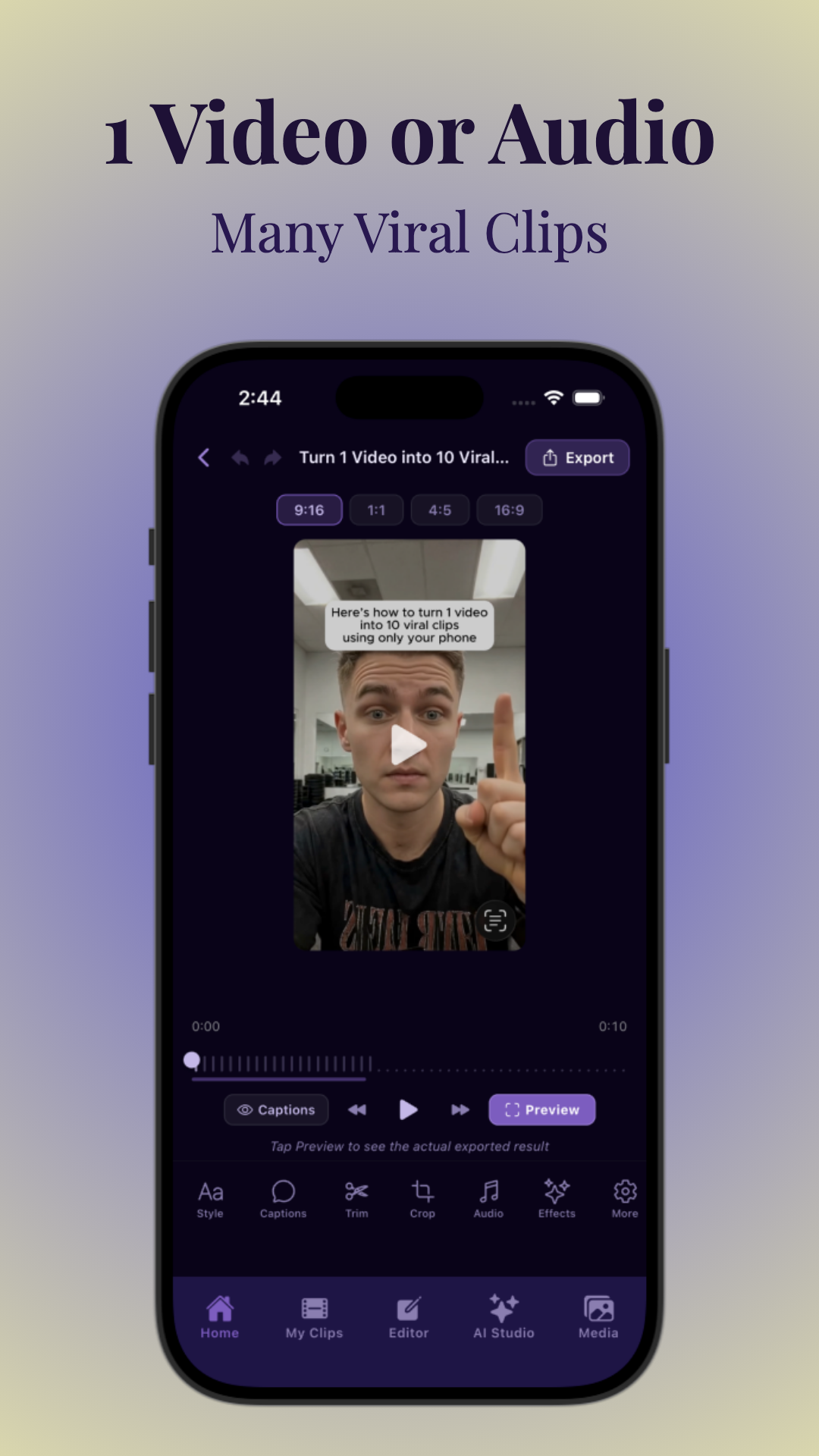
The typical workflow starts with uploading a video file or pasting a link. Vidulk, for instance, allows direct YouTube, podcast, or local uploads. The AI then scans for highlight-worthy segments, presenting a set of short clips for review. Uploads are processed in the cloud, so users can work from any device—desktop, tablet, or smartphone. Vidulk’s mobile-first design means creators can clip and edit on the go, critical for social-first workflows.
Captioning, Reframing, and Trimming
- Automatic Captions: Most top tools generate captions instantly—Vidulk supports multi-language and animated styles. Captions are synced to the audio, with options for stylized fonts, color highlights, and branded templates.
- Vertical Reframing: Content is auto-cropped for TikTok, Shorts, and Reels aspect ratios. Vidulk’s AI detects the primary subject and ensures they remain in frame, even as the original aspect ratio shifts from 16:9 to 9:16.
- Trimming & B-Roll: Fine-tune in/out points, add b-roll, or insert jump cuts directly in the editor. For example, a creator can seamlessly trim a 45-second highlight down to a punchy 20-second short and add a branded b-roll transition.
Vidulk’s editor enables drag-and-drop rearrangement, quick deletion of filler content, and the ability to add animated cutaways or callouts.
Branding, Scheduling, and Publishing
Advanced workflow features include brand kit application, custom intros/outros, and direct scheduling to platforms. Vidulk offers on-device AI Studio for image generation, letting you create branded thumbnails and overlays. For creators managing multiple brands or clients, reusable templates and brand kits ensure consistency without the tedium of manual styling for each clip. Direct scheduling to TikTok, YouTube, and Instagram streamlines publishing, allowing for batch content planning and release.
For step-by-step guidance on making AI video clips, check out How to Make AI Video Clips: A Step-by-Step Guide.
For a comprehensive walkthrough of how to turn long videos into short clips using AI, see our complete workflow guide.
Section 4: Supported Content Types and Creator Workflows
Podcast, Interview, and Webinar Clipping
AI clipping software excels with spoken-word formats. Upload long podcasts, interviews, or webinars—tools like Vidulk and Opus Clip isolate engaging soundbites, question-answer exchanges, and moments of laughter or surprise. For example, an hour-long podcast with four speakers can be automatically broken into 10-15 topical shorts, each focused on a specific story, insight, or exchange.
- Speaker Diarization: Tracks who is speaking for multi-guest shows. Vidulk labels speakers and can even generate lower-third graphics from their names.
- Topic Detection: Splits clips at new discussion segments. If a podcast shifts from business advice to a personal anecdote, the AI creates a new short to match the change in tone and topic.
YouTube Videos, Livestreams, and Marketing Content
For solo creators, marketers, and streamers, AI clipping tools handle:
- Long-form YouTube videos: Automatically extract key moments. For instance, a 30-minute tutorial can be turned into multiple how-to shorts, each focusing on a core step or tip.
- Livestreams: Identify high-engagement spikes for highlight reels. Vidulk’s engagement analytics help pinpoint moments that triggered a surge in chat messages or viewer retention.
- Customer testimonials & product demos: Surface the most persuasive or emotional reactions. The software can flag soundbites where customers express delight, skepticism, or surprise, making for compelling social proof shorts.
Vidulk’s integration with YouTube and Twitch means creators can import videos by simply pasting a link, no downloading required. The AI scans for upticks in comments, likes, or chat, boosting the chance of surfacing shareable moments.
Gaming and Reaction Videos
Gaming creators need face tracking, fast action detection, and overlay support. Tools like ClipMaker AI and Vidulk excel at highlighting killstreaks, big reactions, or chat moments. Look for software that maintains overlay layouts and supports facecam cropping.
- Vidulk can detect and maintain multiple overlay layers—facecam, chat windows, scoreboards—so key information isn’t lost in the vertical crop.
- ClipMaker AI’s action detection flags quick succession events, like win streaks or fails, and enables creators to package these into rapid-fire highlight reels.
Reaction videos benefit from AI that recognizes sudden facial expressions, bursts of laughter, and audience interactions. The ability to jump directly to peak emotional moments cuts editing time dramatically and ensures content is always engaging.
Section 5: Caption and Styling Features
Burned-In and Animated Captions
Captions are crucial for social video engagement. The best AI clipping software offers:
- Burned-in (hard) captions: Embedded directly in the video for guaranteed platform compatibility. This is essential for TikTok, Instagram Reels, and Facebook Shorts, which often autoplay videos without sound.
- Animated captions: Words highlight or pop as they're spoken, increasing attention. Vidulk’s animated captions can be set to pulse, bounce, or color-shift, drawing the viewer’s eye to critical phrases or punchlines.
- Style presets: Choose from viral, meme, or branded templates. Presets save time and ensure consistency, making it easy to apply a signature look across all clips.
Subtitle Customization and Templates
Customization options include:
- Font selection, colors, and positioning: Vidulk offers 30+ font choices, color gradients, and adjustable caption placement to avoid covering faces or key visuals.
- Custom backgrounds, outlines, and drop shadows: Add visibility on busy backgrounds or match your brand’s palette.
- Brand logo overlays and intro/outro templates: Upload logos, set up animated intros, and define reusable outros to speed up the video finishing process.
Veed.io’s template marketplace offers downloadable caption themes, while Vidulk’s brand kits allow for instant application of your company’s colors and fonts.
Multilingual and Accessibility Support
For global audiences, leading tools provide multilingual auto-captioning, Romanized scripts, and right-to-left language support. This is especially valuable for international podcasts and webinars. Vidulk, for instance, supports over 30 languages and can generate captions in English, Spanish, French, Arabic, Hindi, and more. Romanization is available for languages like Japanese or Russian, expanding accessibility. Accessibility features include:
- Colorblind-friendly palettes
- Adjustable caption sizes
- High-contrast modes for visually impaired viewers
See Vidulk's Free Hook Generator for viral caption ideas and hooks tailored to your clips.
Section 6: Editing Control and Post-Generation Refinement
Manual Editing and Transcript-Based Refinement
AI isn’t perfect—creators need control. The best platforms combine automation with manual editing:
- Transcript-based editing: Edit by selecting or deleting transcript sentences. For example, you can highlight a sentence on the transcript and instantly trim it from the video, making dialogue edits fast and intuitive.
- Scene splitting and merging: Adjust clip boundaries or combine related moments. If the AI splits a story across two clips, you can easily merge them for a more natural narrative flow.
- Precision timeline tools: Fine-tune entry/exit frames, add transitions. Vidulk enables frame-by-frame adjustments and real-time preview, so you can ensure every cut lands perfectly on beat or on punchline.
Transcript-based editing is especially useful for creators working in noisy environments or with multiple speakers—edits can be made by simply reading and selecting dialogue instead of scrubbing through video.
B-Roll, Transitions, and Effects
Add professional polish with:
- B-roll insertion: Drop in stock or custom footage between clips. Vidulk includes a built-in stock library and lets you upload your own footage for seamless overlay.
- Transition effects: Fades, wipes, or pop transitions for dynamic shorts. Simple drag-and-drop transitions make it easy to add energy or smoothness between segments.
- Sound effects/music overlays: Drag-and-drop libraries or upload your own. Vidulk enables royalty-free music integration and auto-ducking to balance background tracks with spoken dialogue.
For brands, these features help maintain a high production value, ensuring even AI-generated shorts feel unique and on-brand.
Review and Approval Workflow
Team-oriented tools allow shared editing, time-stamped comments, and approval stages—critical for brands and agencies managing multiple stakeholders. Vidulk supports multi-user workspaces, @mentions within comments, and version history, so teams can iterate on clips and track changes. Approvals can be set as required before export, ensuring compliance and brand safety. For agencies, the ability to invite clients for review without requiring full accounts streamlines the sign-off process and accelerates delivery times.
Section 7: Pricing, Value Comparison, and Collaboration Features
Free Tiers, Trials, and Entry Plans
- Vidulk: Free tier with limited clip exports; paid plans unlock unlimited projects and advanced AI studio features. The free tier is ideal for new creators or those testing the platform, with watermarked exports and basic captioning included.
- Veed.io: Generous free plan for short, watermarked videos; paid removes branding and unlocks pro captioning. Veed.io’s free tier supports short-form exports, making it useful for casual or occasional editors.
- Opus Clip/Wisecut: Free trial credits, then monthly or per-minute pricing. These platforms are best for users who want to experiment before committing, or who need occasional, high-quality clipping without a subscription.
When evaluating a plan, consider your expected volume—are you publishing daily TikToks or a few monthly highlights? Vidulk’s flexible plans scale for individuals and teams, with annual discounts available.
Cost Per Shipped Clip & Monthly Subscriptions
Consider your volume: high-frequency creators save with unlimited plans, while occasional users may prefer pay-as-you-go pricing. Expect $10-30/mo for professional-grade features; some platforms charge extras for longer videos or higher resolution exports. For example, Vidulk’s Pro plan includes unlimited 1080p exports and advanced branding, while its Enterprise tier adds team management and priority support. Veed.io charges extra for 4K exports and subtitle translation. Opus Clip and Wisecut offer per-minute rates, which can add up for long-form content but provide flexibility for infrequent users. Always check for hidden costs, such as additional charges for storage, team seats, or AI studio features.
Collaboration and Team Features
- Multi-user workspaces for teams and agencies: Vidulk supports role-based access, so editors, reviewers, and clients can all collaborate securely.
- Brand kits for consistent styling across clips: Upload your brand assets once and apply them automatically to every export.
- Approval pipelines and shared asset libraries: Streamline review cycles and ensure everyone works from the latest assets.
For creators prioritizing mobile, see our in-depth guide to the best clipping apps for mobile, including Vidulk’s collaborative features. With cloud-based editing, teams can work from anywhere and on any device, keeping production nimble and responsive to trends.
For a side-by-side breakdown of the best Vidulk alternatives and top AI video clipping tools, check out our comparison guide.
Section 8: Distribution, Export, and Localization
Vertical Formatting and Direct Exports
- One-tap vertical/9:16 exports: Essential for TikTok, YouTube Shorts, and Instagram Reels. Vidulk’s vertical framing ensures the subject stays centered, and visual overlays are preserved.
- Direct platform scheduling: Publish to social accounts directly from the app. Schedule releases for prime engagement times and automate cross-platform posting.
- Batch exporting: Ship dozens of shorts at once for high-volume publishing. Vidulk’s batch export allows you to process and schedule up to 50 clips in a single workflow, a boon for agencies and content teams.
Distribution Integrations
Look for integrations with major platforms, cloud drives, and workflow tools (Slack, Google Drive, Dropbox). Vidulk enables rapid sharing and built-in scheduling for creators on the go. Direct integrations with YouTube, TikTok, Instagram, and Facebook mean you can push content live without leaving the app. API access is available for enterprise users, facilitating workflow automation and content syndication. Integration with Slack or Google Workspace keeps teams aligned on publishing schedules and clip status.
Localization and Multilingual Support
Global creators need translation and subtitling tools. Advanced AI can auto-translate captions, generate Romanized scripts, and dub clips with synthetic voices, expanding reach to non-English-speaking audiences. Vidulk offers instant translation into 30+ languages and supports right-to-left scripts for Arabic and Hebrew. For international marketers, this means a single podcast or tutorial can be localized and republished across multiple regions, multiplying reach and engagement. Synthetic voice dubbing is available for key languages, enabling creators to offer native-language shorts without expensive voiceover work.
Learn how AI video technology adapts to different tones and audiences in our practical guide to AI video tone adjustment.
Conclusion
The best AI clipping software empowers creators to rapidly turn hours of footage into shareable, viral-ready shorts. Whether you’re clipping podcasts, interviews, gaming sessions, or marketing videos, today’s leading platforms—like Vidulk—offer a blend of AI-driven highlight detection, customizable captions, robust editing tools, and direct-to-platform distribution. As you compare tools, weigh accuracy, workflow fit, caption quality, pricing, and team features. With the right solution, you’ll unlock new audiences and maximize the impact of your long-form content. The ability to collaborate across teams, localize for international viewers, and automate publishing ensures your content stays relevant and engaging in a fast-moving digital landscape. Whether you’re an indie creator or a large agency, investing in purpose-built AI clipping software like Vidulk can transform your content strategy and accelerate growth in 2024 and beyond.
FAQ
Q: What is the best AI clipping software overall?
A: Vidulk ranks as the best overall for most creators, offering powerful AI, mobile editing, and advanced captioning. Opus Clip and Wisecut are also top choices for specific use cases.
Q: Which AI clipping tool is best for podcasts and interviews?
A: Opus Clip and Vidulk excel for podcasts/interviews, with high-accuracy audio parsing, speaker tracking, and topic detection for natural, shareable clips.
Q: What is the best free AI clipping software?
A: Veed.io and Wisecut offer strong free tiers for occasional use. Vidulk provides a free plan with basic exports, making it a great starting point for new creators.
Q: Which AI clipping software is best for caption-heavy shorts?
A: Vidulk leads in caption styling, with animated captions, branding, and multilingual support. Veed.io is also strong for custom subtitle templates.
Q: What AI clipping tool is best for gaming or reaction videos?
A: ClipMaker AI and Vidulk specialize in gaming/reaction content, offering face tracking, fast action detection, and overlay support.
Q: How do AI clipping tools compare on price, accuracy, and editing control?
A: Most range from free to $30/month. Vidulk and Opus Clip lead in accuracy and workflow control, while Veed.io is best for budget or light editing. Editing depth, branding, and team features vary by platform.
Una comparación ordenada puede empezar por el corte, la transpiración del tejido y las instrucciones de cuidado. Dentro de esa comparación, camisetas del Liverpool mantiene la consulta centrada en la prenda indicada por el propio enlace. Revisar estos puntos reduce confusiones entre preferencias de uso, comodidad y cuidado de la prenda.