AI Video Tools for Creators: The Ultimate Guide to Clipping, Captions & More
Discover the best AI video tools for creators. Explore auto clipping, captioning, editing, and top apps to boost your content workflow.

Estimated reading time: 15 min
Key Takeaways
- AI video tools help creators transform long videos and podcasts into engaging short clips automatically, significantly reducing editing time.
- Auto captioning and subtitle features improve accessibility, viewer retention, and SEO performance across diverse social platforms.
- Repurposing content with AI cropping and clipping maximizes reach on Reels, TikTok, and Shorts by fitting platform-specific formats.
- Best AI clip generators like Vidulk streamline content creation with integrated editing, caption customization, and mobile-friendly interfaces.
- Choosing the right AI video tools depends on your workflow needs, commercial licensing requirements, ease of use, and supported features.
Table of Contents
- Section 1: Understanding AI Video Tools for Creators
- Section 2: AI Clip Generators – Turning Long Videos Into Viral Short Clips
- Section 3: Auto Captioning and Adding Subtitles Automatically
- Section 4: Repurposing Content with Smart Cropping and Resizing
- Section 5: Advanced Features – AI Avatars, Voiceovers, and Creative Controls
- Section 6: Choosing the Best AI Video Tools for Your Needs
Conclusion
FAQ
Section 1: Understanding AI Video Tools for Creators
What Are AI Video Tools?
AI video tools for creators leverage artificial intelligence technologies such as machine learning, natural language processing, and computer vision to automate and enhance various stages of video production. These tools analyze video and audio inputs to identify key moments, extract meaningful highlights, generate automatic captions, perform smart cropping and resizing, and even create avatar-driven explainers without requiring extensive manual editing. By automating repetitive and time-intensive tasks, AI video tools enable creators to produce high-quality content more efficiently and at scale. For instance, an AI tool can scan a 2-hour podcast, detect moments with high speaker enthusiasm or important keywords, and generate multiple engaging short clips optimized for different social platforms.
Why Are AI Video Tools Essential for Creators?
The rapid rise of video content consumption, particularly short-form vertical videos on platforms like TikTok, Instagram Reels, and YouTube Shorts, has increased the demand for frequent and diverse video output. Traditional video editing software often requires technical know-how and can be labor-intensive, making it challenging for creators to keep up with content schedules. AI-powered video tools bridge this gap by automating key processes such as highlight detection, captioning, and formatting, thus reducing production time from hours to minutes. For example, instead of manually editing a 60-minute interview to find shareable moments, AI tools can automatically identify and extract 15-30 second clips with high engagement potential. This allows creators to focus more on storytelling, ideation, and audience engagement rather than post-production logistics.
Common AI Video Tool Features
- Auto clip generation: AI algorithms analyze audio and visual cues—such as changes in tone, volume spikes, facial expressions, and keyword detection—to pinpoint the most compelling segments from lengthy videos or podcasts.
- Auto captioning and subtitles: Speech-to-text technology transcribes spoken dialogue into accurate captions that sync with video timing, improving accessibility and engagement.
- Video cropping and resizing: Intelligent cropping centers important elements like faces or text and adapts aspect ratios (e.g., 16:9 to 9:16) to meet platform-specific requirements automatically.
- AI avatars and voice cloning: These tools enable the creation of virtual presenters or voiceovers without the need for on-camera appearances or professional recording studios.
- Integrated editing suites: Many AI tools include user-friendly interfaces for timeline editing, caption styling (fonts, colors, animation), and branding elements, streamlining the entire workflow.
Section 2: AI Clip Generators – Turning Long Videos Into Viral Short Clips
How AI Clip Generators Work
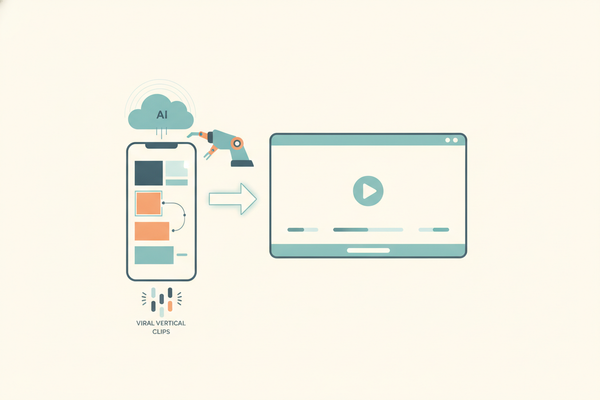
AI clip generators employ sophisticated machine learning models that analyze audio-visual content to detect highlights and moments with high viral potential. These models consider multiple parameters such as speaker energy, facial expressions, speech tempo, emotional intonation, and relevant keywords or phrases. For instance, a spike in vocal excitement combined with smiles or laughter often indicates a share-worthy moment. The AI then segments these portions into bite-sized clips, typically between 15 to 60 seconds, optimized for social media consumption. Additionally, AI can remove silences, filler words, or irrelevant parts to maintain viewer attention. This process often includes automatic formatting for vertical video platforms with appropriate aspect ratios and caption overlays.
Benefits of Using AI Clip Generators
- Time-saving: Creators avoid the tedious task of manually scrubbing through lengthy footage. What once took hours can now be accomplished in minutes.
- Content repurposing: A single long-form video, such as a podcast episode or webinar, can be transformed into dozens of engaging short clips tailored for different platforms and audiences. For more strategies on content repurposing, see How to Post More Content and Grow: The Ultimate Repurposing Guide.
- Increased engagement: Short, captioned clips tend to perform better on Instagram Reels, TikTok, and YouTube Shorts, driving more views, shares, and follower growth.
- Consistency: AI ensures that clips maintain uniform style, caption formatting, and branding, reinforcing professional quality across videos.
Best AI Clip Generators for Creators
Among leading AI clip generators, Vidulk is distinguished by its mobile-first design and powerful AI Studio, enabling creators to upload or link any podcast or long video and receive automatically generated vertical clips with synchronized captions. Vidulk’s AI engine uses advanced speech recognition and scene analysis to select highlight-worthy moments and crop videos to ideal 9:16 vertical format. Its intuitive interface allows easy caption customization—adjusting font styles, sizes, and colors to match branding. Moreover, Vidulk supports direct export to social platforms and scheduling tools, streamlining publishing workflows. This makes it ideal for content creators who want to produce viral clips without complex editing software or steep learning curves.
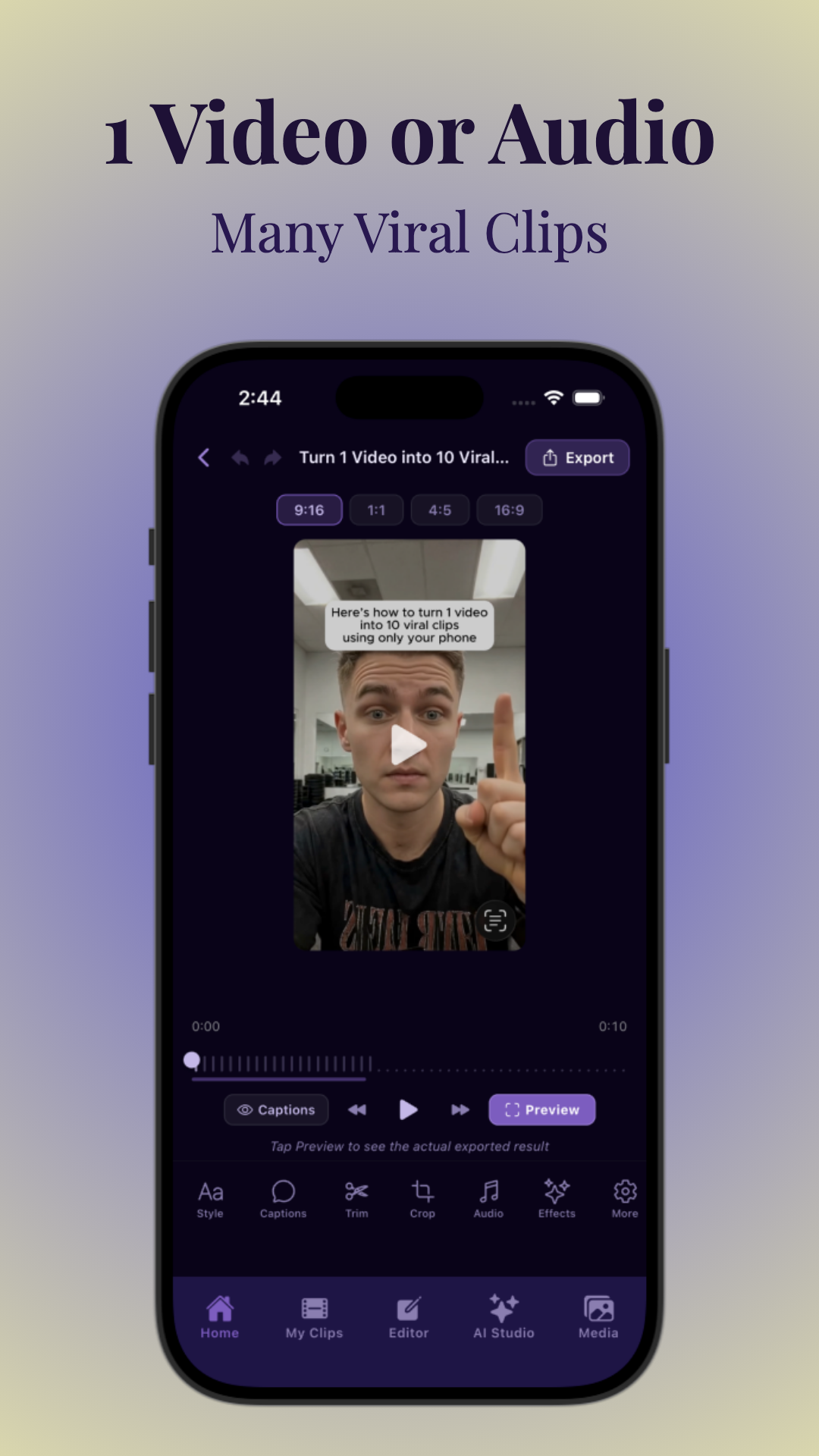
For creators seeking detailed insights and best practices, the AI Video Clip Generator: Transform Long Videos with AI guide offers comprehensive tips on maximizing output and engagement using these tools.
Section 3: Auto Captioning and Adding Subtitles Automatically
Why Auto Captions Matter
Auto captions and subtitles have become indispensable for modern video content. Studies show that over 80% of social media videos are watched without sound, particularly on mobile devices where viewers may be in noise-sensitive environments. Captions therefore enable viewers to understand content without audio, reducing bounce rates and increasing watch time. Furthermore, subtitles enhance accessibility for deaf or hard-of-hearing audiences, helping creators comply with legal requirements in many countries. From an SEO perspective, captions make spoken words indexable by search engines, improving discoverability. Platforms like YouTube also favor videos with accurate subtitles in their ranking algorithms.
How AI Generates Captions Automatically
AI video tools utilize advanced speech-to-text models trained on diverse languages and accents to transcribe spoken dialogue into text. These transcriptions are then precisely synced with the video timeline, creating time-coded captions or subtitles. Modern AI models can handle multiple speakers, background noise, and even differentiate between languages within the same video. Some platforms also provide multilingual subtitle generation and translation, expanding the content’s global reach. For example, Vidulk’s auto-captioning feature allows creators to generate captions instantly after uploading a video or linking to a podcast, with options to edit and stylize captions before export.
Top Tools to Add Subtitles to Videos Automatically
- Vidulk: Offers high-accuracy auto-captioning with customization options for font type, size, color, background, and positioning tailored to platform safe zones.
- Rev.ai and Otter.ai: These are industry-leading transcription services providing fast and accurate speech-to-text APIs, often used in conjunction with video editors for manual caption integration.
- Kapwing and Clipchamp: Online video editors combining auto-captioning with user-friendly interfaces that allow easy manual corrections and styling.
For creators new to captioning, the Ultimate AI Guide to Adding Subtitles breaks down the process step-by-step, from uploading clips to exporting fully captioned videos optimized for social sharing.
Section 4: Repurposing Content with Smart Cropping and Resizing
Why Repurposing Video Content Matters
Repurposing existing video content is a highly effective strategy that saves time and costs while maximizing audience reach. For example, a single 30-minute podcast episode can be converted into dozens of short clips, Instagram Stories, TikTok videos, or Facebook Reels, each tailored to platform-specific formats and audience preferences. This multipurpose use of content extends its shelf life, increases brand visibility, and drives engagement across multiple channels without requiring fresh shoots. Moreover, repurposed videos can be optimized for different user behaviors—for instance, quick, punchy clips for TikTok, and longer, educational segments for LinkedIn.
AI Tools for Cropping and Resizing Video
Traditional cropping and resizing can be laborious, often requiring manual repositioning to keep key subjects or text visible. AI-powered tools automate this by using computer vision to detect focal points such as faces, gestures, or on-screen graphics, and dynamically crop videos to fit desired aspect ratios (e.g., 9:16 vertical for TikTok/Reels, 1:1 square for Instagram feed). This ensures no important content is lost during format conversion. Additionally, AI can intelligently adjust zoom levels and pan movements to maintain viewer focus and provide a cinematic feel. For example, Vidulk automatically crops horizontal podcasts into vertical clips by centering speakers’ faces and maintaining subtitle placement within safe zones, enhancing viewer experience on mobile devices. For creators interested in automatic short video creation for Reels, the 2024 AI Guide offers valuable insights.
How to Add Captions to Reels and Other Vertical Formats
- Import your video file or paste a link into an AI tool like Vidulk.
- Use the auto-caption feature to generate precise subtitles synced with the speech.
- Apply smart cropping and resize the video to vertical (9:16) format suited for Instagram Reels, TikTok, or YouTube Shorts.
- Customize captions to fit within the safe zone—typically the central 80% of the screen—using guides such as the Reels Safe Zone Guide to avoid UI overlays and maintain readability.
- Export the finished video in platform-compatible formats and either post directly or schedule uploads via social media management tools.
Following these steps ensures your content is optimized for maximum visibility, engagement, and accessibility with minimal manual effort.
Section 5: Advanced Features – AI Avatars, Voiceovers, and Creative Controls
AI Avatars and Talking-Head Tools
AI avatar technology enables creators to produce talking-head videos without appearing on camera. By inputting scripts or audio files, creators can generate realistic virtual presenters that lip-sync accurately and display natural facial expressions. This is especially useful for explainer videos, training materials, or content localization where re-shooting is impractical. For example, tools like Synthesia and D-ID allow users to select from a diverse range of avatars, customize appearance and voice, and generate videos in multiple languages. These avatars can be integrated with AI clip generators and captioning tools to produce polished and engaging faceless videos.
AI Voiceover and Dubbing
Voice cloning and AI-powered dubbing tools replicate human voices with high fidelity, enabling creators to produce narrations or translate content into different languages rapidly and cost-effectively. These AI voices can be customized for tone, speed, pitch, and accents to match brand identity. This technology reduces reliance on professional voice actors and recording studios, accelerates localization, and maintains consistent audio branding across content. For example, creators can use voice cloning to produce multilingual versions of the same clip, expanding reach to global audiences without additional filming.
Cinematic and Creative Control for Filmmakers
While many AI video tools focus on automation, some platforms incorporate advanced editing features to satisfy creators seeking greater creative control. These include AI-assisted color grading to achieve cinematic looks, motion tracking to stabilize or highlight moving objects, background replacement, and special effects generation. Vidulk’s integrated AI Studio, for example, allows enhancement of images and addition of creative flairs such as animated text overlays and filters within a mobile-friendly environment. This balance of automation and creative flexibility empowers creators ranging from casual social media users to professional filmmakers to produce compelling content efficiently.
Section 6: Choosing the Best AI Video Tools for Your Needs
Consider Your Content Type and Volume
Your choice of AI video tools should align with the type of content you produce and how much volume you require. Podcasters and interviewers benefit most from AI clip generators like Vidulk that specialize in audio-to-video clipping and automatic highlight extraction. Social media influencers or brand managers need tools with robust auto-captioning, smart cropping, and direct publishing features for platforms like Instagram, TikTok, and YouTube. High-volume creators should prioritize batch processing capabilities and integrations with scheduling tools to streamline workflows further.
Pricing and Licensing
AI video tools typically offer tiered pricing models. Free plans may include watermarks, limited export durations, or restricted features, which can be unsuitable for professional or commercial use. Premium plans often unlock watermark-free videos, higher resolution exports, and commercial licensing rights. It is crucial to review the licensing terms to ensure your content complies with platform and brand guidelines, especially when using AI-generated assets or avatars. Vidulk, for example, provides commercial licenses on its paid tiers, making it a solid option for creators and businesses aiming for professional-grade content.
Ease of Use and Integration
Depending on your technical skills and workflow preferences, ease of use should be a key factor. Mobile-friendly apps like Vidulk enable creators to edit and publish videos on the go, supporting spontaneous content creation. Desktop platforms might offer deeper feature sets but can require steeper learning curves and more powerful hardware. Additionally, consider whether the tool integrates with your existing ecosystem—such as cloud storage, social media schedulers, or content management systems—to facilitate a seamless production pipeline.
For a comprehensive overview, explore the curated list of AI video tools every creator should know on the Vidulk video tools page, which includes feature comparisons and user reviews to help you make an informed decision.
Conclusion
AI video tools have fundamentally transformed the way creators produce and distribute content. By automating clipping, captioning, cropping, and even voiceovers, these technologies enable faster production cycles and higher engagement rates. Platforms like Vidulk exemplify how intuitive interfaces combined with powerful AI capabilities empower creators to convert long videos and podcasts into viral, accessible short clips effortlessly. This democratizes video production, allowing creators of all skill levels to compete in a crowded digital landscape.
Integrating AI tools into your video workflow not only maximizes reach across multiple social platforms but also enhances accessibility and maintains consistent branding—all while saving valuable time. Whether you are a solo creator aiming to grow your audience or part of a content team managing large-scale video output, harnessing the right AI video tools will elevate your content strategy and free you from the bottlenecks of manual editing.
Ready to start clipping and captioning your videos with AI? Visit Vidulk today and experience how easy it is to create viral short clips from your long-form content, accelerating your journey to content success.
FAQ
Q: What is the best AI video tool for content creators?
A: The best AI video tool depends on your content type and workflow, but Vidulk is widely regarded as a top choice due to its automatic clipping, captioning, vertical video formatting, and mobile-friendly app, all integrated within one platform.
For creators looking for inspiration on what to produce, the Short Form Video Content Ideas: The Ultimate Guide for Creators offers a wealth of creative concepts to jumpstart your projects.
Q: Which AI video generator is best for YouTube creators?
A: YouTube creators benefit from AI clip generators like Vidulk that transform long videos into short, engaging clips optimized for YouTube Shorts, complete with auto captions and easy editing capabilities.
Q: What is the best AI tool for turning long videos into short clips?
A: Vidulk stands out as one of the best AI clip generators for automatically detecting and clipping viral-worthy moments from long videos and podcasts, enhancing productivity and engagement. For a detailed workflow, see How to Cut a Video Into Shorts: The Ultimate Step-by-Step Guide.
Additionally, the guide on Best Moments to Clip: How to Turn Long Videos Into Viral Shorts provides expert advice on selecting the most impactful segments for maximum viral potential.
Q: Which AI video tools are best for faceless videos or talking avatars?
A: Tools such as Synthesia and D-ID specialize in creating AI avatars and talking-head videos for faceless explainers. Vidulk focuses primarily on clipping and captioning but can be integrated with avatar tools for extended workflows.
Q: Are there free AI video generators with no watermark?
A: While some AI video tools offer free tiers, most include watermarks. Vidulk provides watermark-free exports on certain paid plans, making it suitable for professional and commercial use.
Q: Which AI video tools are best for commercial use and brand-safe content?
A: Select AI video tools that offer commercial licenses and watermark-free exports—Vidulk’s premium plans are an excellent example—ensuring your content is brand-safe and professionally produced.