Vidulk YouTube Integration: Automate and Streamline Your Video Workflow
Discover how Vidulk YouTube integration streamlines video workflows, automating uploads and enhancing YouTube Studio integration for efficient content creation.

Estimated reading time: 7 minutes
Key Takeaways
- AI-powered clipping: Transform long-form videos into shareable shorts automatically.
- Seamless automation: Use Vidulk API with no-code platforms for scheduled YouTube uploads.
- Studio integration: Indirectly connect with YouTube Studio for metadata and analytics.
- Best practices: Batch processing, error handling, and efficient workflow scaling.
Table of Contents
- What Is Vidulk and Why Use It with YouTube?
- How to Automate YouTube Uploads with Vidulk
- How to Integrate Vidulk with YouTube Studio
- Best Practices & Troubleshooting
- Conclusion & Additional Resources
What Is Vidulk and Why Use It with YouTube?
Vidulk is an AI video clipping tool that transforms lengthy videos or audio—such as YouTube links—into polished, shareable segments. It leverages audio peaks and scene changes to detect highlights, then generates clips complete with captions, thumbnails, and logo overlays. All processing runs on-device to protect your privacy.

- AI highlight detection: Automatically finds engaging segments.
- Batch processing: Extract frames and process multiple URLs.
- Custom overlays: Add captions, thumbnails, and branded logos.
- On-device privacy: Ensures no external data exposure.
With these capabilities, creators and agencies can reduce editing time by up to 80%, scale short-form content production, and maintain brand consistency. If you’re looking for inspiration on what to create, check out these short form video content ideas for creators.
How to Automate YouTube Uploads with Vidulk
Automate your YouTube workflow by combining Vidulk’s API with no-code tools like Make.com. Schedule triggers, process videos, and publish clips—without a single line of server code.
- Sign Up & API Access:
Register at Vidulk.com for a free tier (5 projects, 100 clips/day). In Settings > API, copy your API key. Optionally add OpenAI/ElevenLabs keys for advanced captions. For details, see How to Use Vidulk API. - Authenticate API Requests:
Send a POST to/api/setupwith JSON:
{ "api_key":"YOUR_KEY", "openai_key":"YOUR_OPENAI_KEY" }
Receive anauth_tokenand use Bearer auth in headers for subsequent calls. - Upload & Process YouTube Video:
POST to/api/clip/uploadwith:
{ "video_url":"https://youtube.com/watch?v=example", "project_id":"PROJECT_ID", "detect_highlights":true, "batch":true }
Poll/api/clip/status?job_id=JOB_IDuntil completed, then retrieve clip URLs. - Set Up No-Code Automation:
In Make.com, create a scenario with a webhook triggered on Vidulk job completion. Add the YouTube module “Upload a Video,” mapping the clip and thumbnail URLs. Schedule using calendar triggers. Alternatively, see Vidulk Zapier Workflows Automation.
Common use cases include:
- Podcasters generating multiple short clips per episode.
- Agencies producing Reels, TikToks, and Shorts at scale.
- Brands auto-branding clips with logo overlays and AI summaries.
How to Integrate Vidulk with YouTube Studio
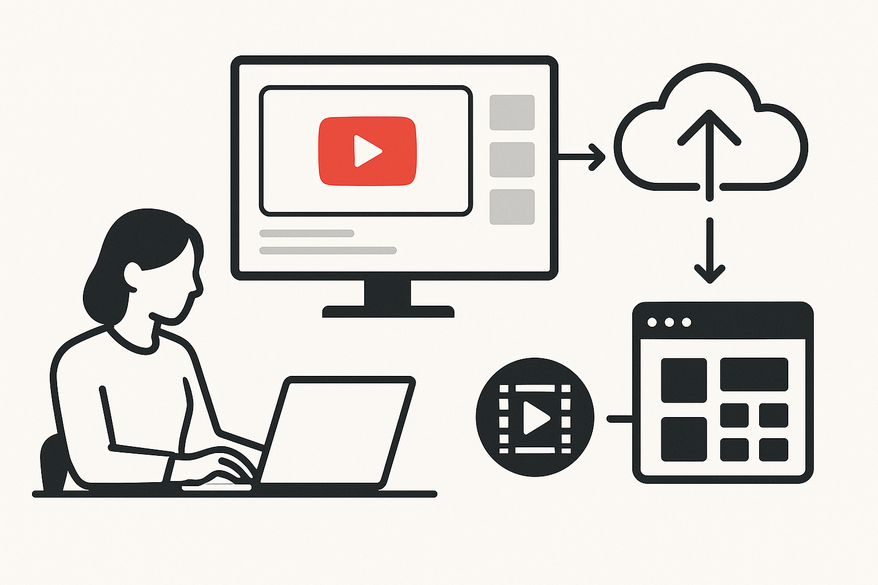
Though Vidulk doesn’t embed directly in Studio, you can feed AI-clipped content into YouTube Studio via automated uploads—enabling efficient metadata management and analytics.
- Generate Clips: Use Vidulk as shown in Section 2 to obtain public MP4 and thumbnail URLs.
- Create a Scenario: In Make.com or Zapier, add a webhook for job completion, then a YouTube “Upload Video” action. Map: File URL → video source, Thumbnail URL → custom thumbnail, Title/Description/Tags → metadata fields.
- Finalize in Studio: Refine metadata, schedule premieres, and leverage Studio’s editing tools for end screens and captions.
This workflow lets AI handle clipping, while YouTube Studio focuses on engagement and data-driven optimization. If you want to take your automation further, learn how Zapier AI video clip automation transforms your content workflow.
Best Practices & Troubleshooting
Best Practices
- Use batch processing to minimize API calls.
- Implement retries with exponential back-off for HTTP 429 errors.
- Set
duration_limitper platform (e.g., 60 seconds for Reels). - Test workflows on the free tier before scaling up.
Troubleshooting
| Issue | Cause & Solution |
|---|---|
| Rate limits hit | Add a 5 s delay between requests or upgrade your plan. |
| Upload failure | Check file formats and multipart headers. |
| No highlights detected | Adjust extract_frames and detect_highlights settings. |
| Make.com sync issues | Reauthenticate the YouTube module and test the webhook. |
| Thumbnail not applied | Ensure the URL is publicly accessible with CORS. |
Conclusion & Additional Resources
Vidulk YouTube integration brings AI-driven clipping into your video workflow. You’ve learned how to automate uploads, integrate with YouTube Studio, and implement best practices for efficient scaling. For further optimization, consider mastering Vidulk Clip Library Management for video asset workflow optimization to streamline your content organization. If you're interested in maximizing your content output and reach, explore the ultimate repurposing guide for posting more content and growing your audience. If you want to learn more about transforming long videos into short, engaging clips, see the complete AI workflow for turning long videos into short clips. For creators seeking to automate their social content creation, the Vidulk Buffer Integration offers a seamless way to schedule and distribute video clips across platforms. If you want to automate TikTok video posts as well, check out this step-by-step guide to automating TikTok video posts with Vidulk. If you're interested in streamlining your video workflow even further, explore the Vidulk Google Drive Integration for seamless file management and automation.
Cuando se busca una camiseta de club, es útil comparar medidas, corte y detalles de confección antes de decidir. Al evaluar distintas posibilidades, equipacion de futbol del Arsenal permite centrar la revisión en información práctica de la prenda. Revisar estos puntos reduce confusiones entre preferencias de uso, comodidad y cuidado de la prenda.
Additional Resources:
- Vidulk API docs
- Make.com YouTube integration
- Vidulk vs Veed vs Descript Compared
- Comprehensive Vidulk Zapier guide
Ready to revolutionize your workflow? Start your free Vidulk trial and explore Make.com templates today.
FAQ
- Can I use Vidulk without coding skills?
Yes, Vidulk’s no-code integrations with platforms like Make.com and Zapier allow full automation without writing code. - How secure is my video data?
All clipping and processing run on-device, ensuring your raw footage never leaves your system. - What platforms does Vidulk support?
Vidulk outputs MP4 and MOV formats suitable for YouTube, Instagram Reels, TikTok, and more. For creators looking to leverage the latest in AI-powered editing, check out the ultimate guide to AI video tools for clipping, captions, and more. - What if I hit API rate limits?
Implement exponential back-off delays or consider upgrading your plan for higher throughput.