How to Go Viral with Clips: The Ultimate Repurposing Workflow
Discover how to go viral with clips. Learn batching, repurposing, viral hooks, and posting consistently to grow on TikTok, YouTube Shorts, and more.

Estimated reading time: 12 min
Key Takeaways
- Discover the proven workflow for how to go viral with clips across TikTok, YouTube Shorts, and Instagram Reels.
- Master content batching and repurposing to post more consistently and maximize your reach.
- Learn how to identify viral moments from podcasts, interviews, and long-form videos using AI tools.
- Understand the essential elements of hooks, formatting, editing, and platform optimization for viral growth.
- Get actionable strategies for analytics, iteration, and building a recognizable brand with your clips.
Going viral isn’t luck—it’s workflow. If you want to learn how to go viral with clips, master content batching, and post more consistently, you’re in the right place. This guide breaks down the viral video formula, from mining long-form content for gold to editing and posting on TikTok, YouTube Shorts, Instagram Reels, and Facebook Reels. Whether you’re a podcaster, streamer, or marketer, you’ll gain a repeatable system to repurpose one video into many and grow your audience fast.
Step 1: Find Viral Clip Ideas in Your Niche
Going viral starts with the right idea. Research trending topics, analyze competitor clips, and mine your own niche for proven formats. Here’s how:
- Trending Topics: Browse TikTok’s Discover, YouTube Trending, and Instagram Explore to see what’s hot now. Look for patterns in hooks, hashtags, and content styles.
- Competitor Research: Study high-performing clips in your niche. Note their video structure, hooks, and editing style. Use tools like Vidulk to analyze what makes these clips work.
- Niche Research: Dive into subreddits, forums, and comments to identify questions, pain points, or stories that resonate with your audience.
- Clip Formats: Viral clips often use ranking (Top 5, countdowns), remix, or reaction formats. These are proven to boost engagement and shares.
For more on finding and generating viral ideas with AI, check out the AI Clip Generator: Transform Long Videos Into Viral Shorts guide.
Step 2: Choose the Right Source Content to Repurpose
Not all content is equal when it comes to going viral with clips. Focus on long-form videos that are packed with value, emotion, or entertainment:
- Podcasts & Interviews: Full of quotable insights, debates, and authentic reactions.
- Livestreams: Capture unscripted moments, funny mishaps, and real-time engagement.
- Lectures & Tutorials: Highlight key takeaways, breakthrough moments, or surprising facts.
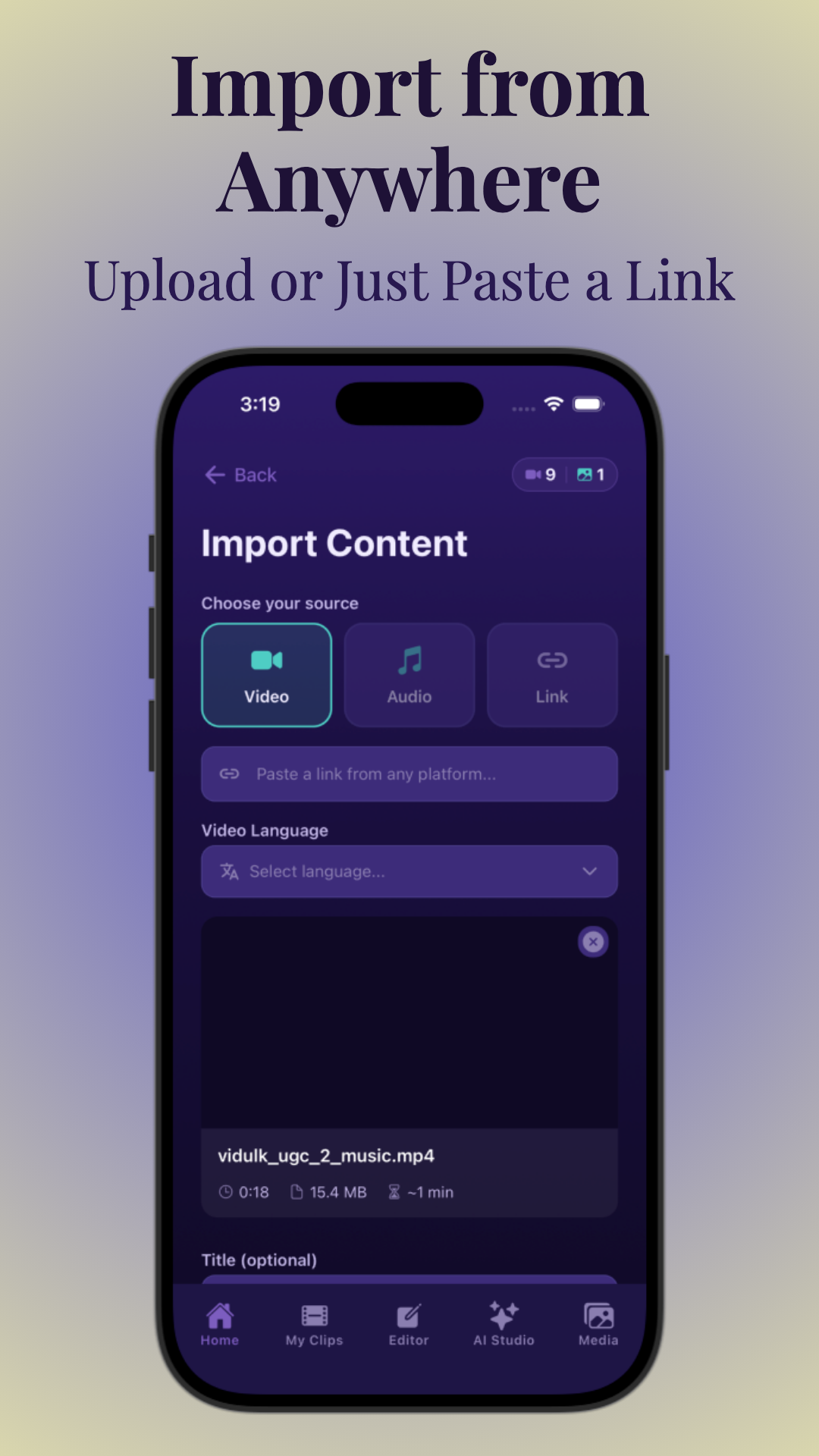
Use Vidulk’s upload or paste-link feature to quickly import your long-form content and let AI scan for the best moments.
Step 3: Batch Your Content Creation Workflow
Batching is the secret to posting more consistently. Instead of creating one clip at a time, process multiple videos in a single session:
- Set aside 1-2 days per week for content clipping and editing.
- Use Vidulk’s AI to generate multiple short clips automatically from each long video.
- Edit, format, and schedule your clips for the week or month ahead.
This approach not only saves time, but also ensures you always have fresh content ready to post, boosting your consistency and chances of going viral. Learn more about batching and AI-powered repurposing in the AI Video Clip Generator: Transform Long Videos with AI guide. If you want to streamline your content creation workflow and post more consistently, there are proven strategies to help you go viral with clips.
Step 4: Hook Viewers in the First 3 Seconds
Your clip’s opening moments make or break its viral potential. The best hooks grab attention, build curiosity, and hint at the payoff immediately:
- Start Bold: Open with a surprising statement, bold question, or emotional reaction.
- Curiosity Gap: Tease what’s to come without giving everything away. (e.g., “Here’s the one mistake everyone makes...”)
- Show the Payoff Early: Use a quick preview or reaction shot to promise value or entertainment.
- Visual Cues: Add jump cuts, animated text, or emojis to heighten engagement.
Experiment with different hook styles and test what drives the highest watch time. Try Vidulk’s Free Hook Generator to spark new ideas for your opening lines.
Step 5: Edit for Retention and Platform Compatibility
Viral clips are fast-paced, visually dynamic, and easy to consume. Here’s how to optimize your editing:
- Keep It Short: Ideal viral clip length is 15-45 seconds for TikTok and Reels, up to 60 seconds for YouTube Shorts.
- Fast Cuts: Trim out fluff, add quick jump cuts, and maintain a rapid pace to avoid drop-off.
- Captions: Use clear, dynamic subtitles so your message lands even on mute. Vidulk makes adding and customizing captions effortless.
- Sound Effects & Music: Enhance key moments with subtle sound cues or trending audio.
- Format for Vertical: Always export 9:16 for TikTok, Shorts, Reels, and Facebook Reels.
For more hands-on editing tips, see How to Make AI Video Clips: A Step-by-Step Guide.
Step 6: Optimize Titles, Captions, and Hashtags for Discoverability
Your clip’s metadata is just as important as the visuals. To maximize reach:
- Titles & Captions: Use keywords your target audience is already searching for. Pose questions or promise a benefit.
- Hashtags: Mix broad (#fyp, #viral) and niche-specific hashtags (#podcastclips, #marketingtips).
- Trending Sounds: On TikTok and Reels, pairing your clip with a trending audio track can boost visibility.
Test different combinations and track which ones drive the most views and shares.
Step 7: Post Consistently and Cross-Platform
Consistency is the backbone of audience growth. Here’s how to post more regularly and repurpose clips for every major platform:
- Set a Posting Cadence: Aim for 3-7 clips per week. Batch-schedule uploads to avoid burnout.
- Cross-Post: Share your clips on TikTok, YouTube Shorts, Instagram Reels, and Facebook Reels for maximum exposure.
- Vary Formats: Mix solo, ranking, reaction, and remix clips to keep your content fresh and engaging.
With Vidulk, you can automate much of this workflow, turning one video into many platform-ready clips in minutes. Try it for free at Vidulk. For more inspiration, check out these short form video content ideas for creators to keep your posts engaging and varied. If you want to learn more about consistent posting and a viral clip workflow, see our workflow for viral clips and how to post more consistently.
Step 8: Analyze, Iterate, and Double Down on Winners
Going viral is all about learning what works and doing more of it. Use analytics to guide your strategy:
- Track Watch Time: Insights from TikTok and YouTube Shorts tell you which clips hold viewers the longest.
- Test Multiple Hooks: Try A/B testing different openings and keep the winners.
- Double Down: When a format or topic goes viral, batch-produce similar clips to ride the momentum.
Review your analytics weekly and refine your workflow for better results.
Step 9: Brand and Present Clips Natively
To grow sustainably, make your clips feel like they belong on each platform—not like ads. Tips:
- Native Editing: Use platform-style captions, stickers, and effects.
- Consistent Branding: Add a subtle logo or watermark, but keep it non-intrusive.
- Value First: Focus on entertainment or education, not self-promotion.
Clips that blend in with trending content are more likely to be watched, shared, and recommended.
Tips & Common Mistakes
- Don’t Overthink Perfection: Speed and volume matter more than flawless editing in the short-form world.
- Avoid Overly Promotional Clips: Clips that feel like ads rarely go viral—lead with value or story.
- Watch Out for Copyright: Only use music, video, or audio you have rights to, or stick with platform-approved sounds.
- Don’t Neglect Subtitles: Most viewers watch without sound—captions are essential.
- Failing to Analyze: If you aren’t reviewing analytics, you’re missing your viral formula. Iterate relentlessly.
Conclusion
Learning how to go viral with clips is about workflow—not luck. Start by finding viral ideas, batch-create and repurpose your content, craft irresistible hooks, edit for retention, and post consistently across platforms. Use AI tools like Vidulk to accelerate your workflow and maximize your reach. With regular analysis and iteration, you’ll turn long videos into viral growth engines—one clip at a time. For a complete AI workflow to turn long videos into short clips, check out this guide to turning long videos into short clips with AI. For more on mastering your content creation workflow to post more consistently and go viral with clips, explore our detailed guide.
FAQ
- How do I find viral clip ideas for my niche?
Research trending topics on TikTok, YouTube Shorts, and Instagram using Discover or Explore pages. Analyze top-performing competitor content and look for repeatable formats like rankings, reactions, or listicles. Use audience questions from your comments or communities for inspiration. - What makes a clip go viral on TikTok or YouTube Shorts?
A viral clip grabs attention in the first 1-3 seconds, maintains fast pacing, and delivers a payoff or strong emotion. Use bold hooks, dynamic editing, and trending sounds. Keep clips platform-native and relevant to current trends. - How long should a clip be to go viral?
Most viral clips are 15-45 seconds on TikTok and Instagram Reels, and can be up to 60 seconds on YouTube Shorts. Shorter clips typically see higher completion rates and more shares. - What is the best hook for a viral clip?
The best hooks are bold, surprising, or tease a curiosity gap. For example, start with "Here’s what nobody tells you about…" or show a dramatic reaction or reveal in the first seconds. Test multiple hooks to see which drives higher watch time. - Should I use hashtags and trending sounds on clips?
Yes. Hashtags help categorize your clips for discovery, and trending sounds can boost visibility, especially on TikTok and Instagram Reels. Use a mix of broad and niche hashtags, and pair your visuals with currently popular audio where appropriate. - How do I turn long videos into viral clips?
Use an AI-powered app like Vidulk to upload your long video or podcast. The AI scans for highlight moments, generates short captioned clips, and formats them for platforms like TikTok and YouTube Shorts. Batch process for efficiency and iterate based on analytics. For a comprehensive guide, see the ultimate video to shorts converter guide.